

Buying a home is one of the most significant investments you’ll ever make. While it’s an exciting time, it can also be filled with uncertainty, especially when you’re faced with unfamiliar terms and crucial decisions. You might be wondering if a property survey is truly worth the cost, or perhaps you’re worried about the risk of discovering expensive, hidden defects after you’ve already moved in. These are common concerns for UK home buyers, but gaining clarity and confidence is simpler than you think.
This complete guide is designed to provide that peace of mind. We will demystify the entire process, explaining the crucial differences between the main types of RICS property surveys, from the Level 2 HomeBuyer Report to the comprehensive Level 3 Building Survey. By the end, you will understand exactly why a professional survey is a vital investment, how to choose the right one for your potential new home, and how it can empower you to avoid unforeseen repair costs and make a truly informed purchase decision.
Why You Absolutely Need a Property Survey When Buying a Home
When buying a property in the UK, it’s easy to confuse your lender’s mortgage valuation with a proper property survey. They are not the same. A mortgage valuation is a brief assessment purely for the lender’s benefit, confirming the property is adequate security for the loan. A professional survey, on the other hand, is an in-depth "health check" conducted by a RICS-Certified surveyor entirely for your protection. Investing in one provides the clarity and confidence you need to make one of the biggest financial decisions of your life.
Uncovering Hidden and Costly Defects
A surveyor is professionally trained in disciplines like building surveying to identify serious issues that an untrained eye would almost certainly miss. These aren’t just cosmetic problems but potentially major structural faults that could cost a fortune to fix. Common hidden defects include:
-
Structural movement or subsidence
-
Penetrating damp and timber decay
-
Defective or failing roofing
-
Issues with drainage or insulation
Discovering a serious damp issue after you move in could easily set you back thousands of pounds, turning your dream home into a financial burden.
Gaining Powerful Negotiation Leverage
A detailed survey report provides you with factual, impartial evidence of the property’s true condition. If significant defects are uncovered, this report becomes a powerful negotiation tool. Armed with this expert information, you can confidently approach the seller to either request that they fix the issues before the sale completes or renegotiate the purchase price to cover the cost of future repairs. This step alone can often save you more than the cost of the survey itself.
Budgeting for Future Maintenance and Repairs
Beyond identifying immediate problems, a comprehensive report gives you a clear picture of the property’s ongoing maintenance needs. It highlights elements that are nearing the end of their life, such as an ageing boiler or old wiring, allowing you to plan and budget for future work. This foresight prevents the stress of unexpected bills during your first few years of ownership, providing invaluable peace of mind and helping you manage your finances effectively from day one.
The Main Types of RICS Property Surveys Explained
When you commission a property survey, you want assurance that it meets the highest professional standards. That’s why all reputable surveys are conducted by RICS-Certified surveyors. The Royal Institution of Chartered Surveyors (RICS) is the governing body that ensures quality and provides you with the clarity and confidence to make an informed decision.
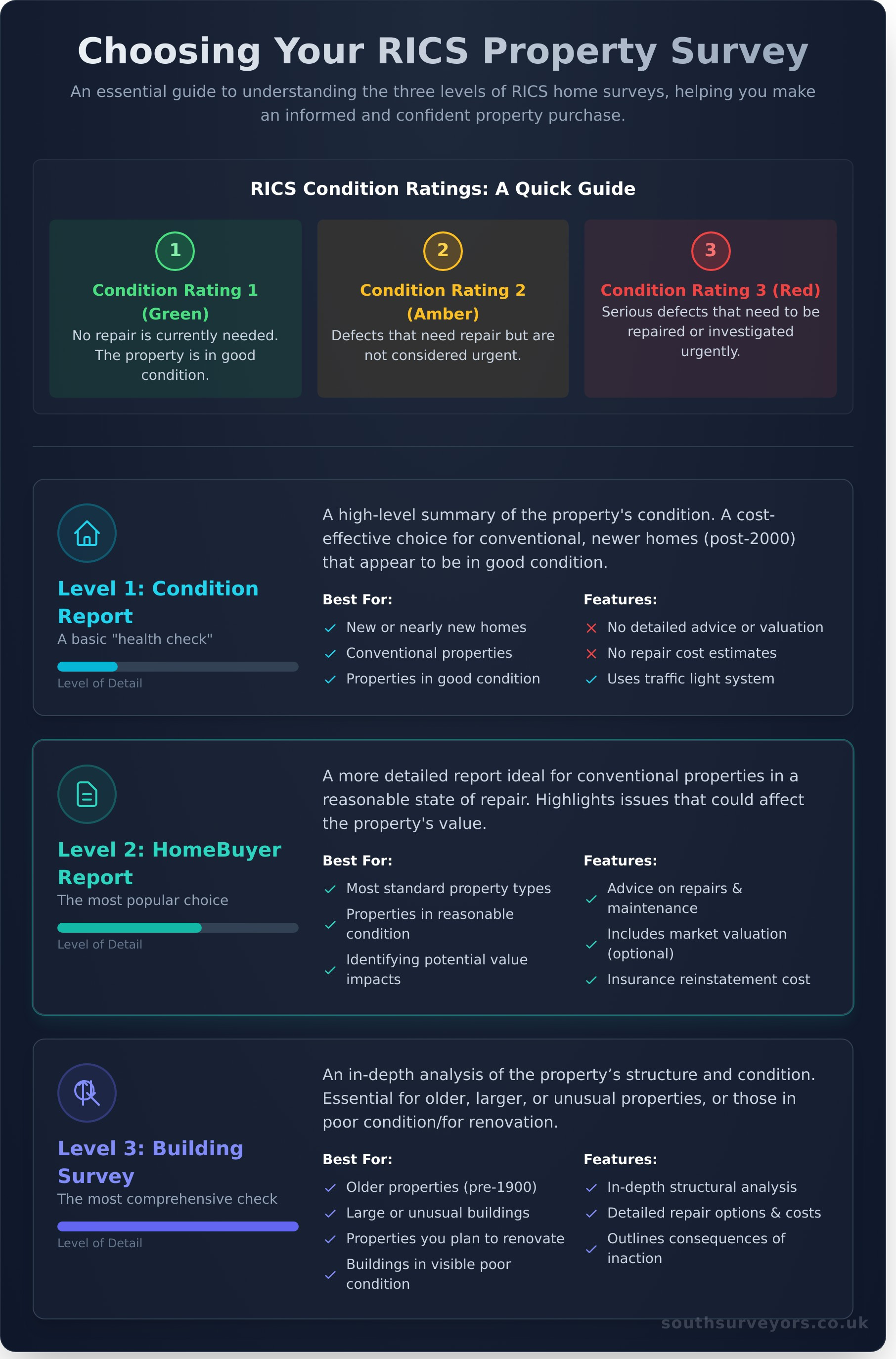
RICS reports use a simple traffic light system to rate the condition of the property’s different elements:
-
Condition Rating 1 (Green): No repair is currently needed.
-
Condition Rating 2 (Amber): Defects that need repairing or replacing but are not considered serious or urgent.
-
Condition Rating 3 (Red): Defects that are serious and/or need to be repaired, replaced or investigated urgently.
Think of the different survey levels like a medical check-up: a Level 1 is a basic health check, while a Level 3 is a full MRI scan. Choosing the right one depends entirely on the age, type, and condition of the property you hope to buy.
RICS Home Survey – Level 2 (HomeBuyer Report)
The Level 2 survey is the most popular option for UK home buyers. It’s ideal for conventional properties in a reasonable state of repair. This report goes into more detail than a Level 1, highlighting any defects or issues that could affect the value of the property, such as damp or subsidence. It provides professional advice on repairs and ongoing maintenance and often includes a market valuation and insurance reinstatement cost.
RICS Home Survey – Level 3 (Building Survey)
Formerly known as a "full structural survey," the Level 3 Building Survey is the most comprehensive inspection available. This detailed report is essential for older (pre-1900), larger, or unusual properties, as well as those you plan to renovate or that are in visibly poor condition. It provides an in-depth analysis of the property’s structure and condition, outlining defects, repair options, and the potential consequences of not addressing them.
Choosing the correct report is a crucial step towards a secure property purchase. It provides the expert insight you need for complete peace of mind. Unsure which survey you need? Contact our experts for advice.
What Happens During a Surveyor’s Inspection?
Understanding what a surveyor does on-site can demystify the process and give you confidence in the report you receive. A property survey is a methodical, non-invasive inspection. This means the surveyor will not lift floorboards, move heavy furniture, or drill into walls. Their role is to use their expert eye and professional equipment such as a damp meter, binoculars, and a torch to conduct a thorough visual assessment of the property’s condition.
The primary goal is to identify any potential problems, from minor maintenance issues to significant structural defects, providing you with the clarity needed to make an informed decision.
The Exterior Inspection Checklist
A meticulous surveyor begins their assessment from the outside, looking at the overall structure and integrity of the building. This comprehensive check typically includes:
-
Roofs, Chimneys, and Guttering: Assessing for loose or missing tiles, damaged flashing, signs of sagging, and blocked or broken guttering that could lead to water damage.
-
Walls: Inspecting for cracks, bowing, or signs of subsidence. The surveyor will also check for damp-proof course issues and the condition of the brickwork or render.
-
Windows and Doors: Checking the condition of frames, glazing, and seals for rot, damage, or poor installation.
-
Grounds and Boundaries: Reviewing fences, boundary walls, paths, and driveways. They will also look at outbuildings like garages or sheds and check for visible signs of drainage problems.
The Interior Inspection Checklist
Inside the property, the surveyor continues their detailed inspection, room by room, including accessible loft spaces and cellars. Key areas of focus are:
-
Damp and Timber Decay: Using a damp meter and visual checks to look for signs of rising damp, condensation issues, and wood-boring insects or rot in timbers.
-
Structural Movement: Looking for internal cracks, uneven floors, or doors that don’t close properly, which could indicate movement.
-
Condition of Surfaces: Assessing the state of walls, ceilings, and floors.
-
Services (Visual Check): A visual inspection of the plumbing, drainage, and electrical installations to identify any obvious defects or areas of concern.
What a Surveyor Cannot Do
It is crucial to understand the limitations of a visual inspection. A RICS-certified surveyor operates within a strict code of conduct and cannot:
-
Undertake invasive actions: They will not lift carpets, move furniture, or open up sealed hatches.
-
Test services: They do not test the electrical, heating, or plumbing systems. For this, you would need a qualified tradesperson like a Gas Safe engineer or an electrician.
-
Provide repair cost estimates: Unless you have commissioned a more detailed report like a Full Structural Survey (Level 3) that specifically includes this service.
From Survey Report to Confident Purchase: Your Next Steps
Receiving your property survey report is a pivotal moment in your home-buying journey. It’s important to remember that very few properties, especially older ones, will receive a completely ‘clean’ bill of health. Your report is not a pass-or-fail test; it is a comprehensive, expert tool designed to give you the clarity and confidence to make a fully informed decision. Take the time to read it thoroughly, from the summary to the detailed appendices.
Decoding the Report’s Key Sections
A RICS-certified report is structured to be clear and methodical. To get the most from it, focus on these key areas first:
-
The Overall Summary: This provides a high-level overview of the property’s condition and highlights the most significant findings.
-
The ‘Traffic Light’ Ratings: Our reports use a simple Condition Rating system. Pay closest attention to elements marked with a Rating 3 (red), as these indicate urgent or serious defects requiring immediate attention.
-
Recommendations for Action: Your surveyor will outline the next steps, which may include seeking further advice from specialists or obtaining quotes for repair work.
Getting Quotes for Recommended Repairs
The report empowers you to turn an unknown problem into a fixed cost. Use the detailed descriptions of defects to get accurate quotes from qualified tradespeople. For example, you can approach a roofer for issues with the chimney stack, a damp-proofing specialist for rising damp, or a qualified electrician to investigate the wiring. Having these figures (e.g., "£2,500 for roof tile replacement") provides a factual basis for any subsequent negotiations.
Communicating with the Estate Agent and Seller
Armed with the facts from your survey and contractor quotes, you can proceed with confidence. It is best practice to conduct all communication calmly and professionally through your solicitor. They can present the relevant findings to the seller’s representatives. Based on the information, you can decide your preferred course of action:
-
Renegotiate the Price: Ask for a reduction in the sale price to cover the cost of essential repairs.
-
Request Repairs: Ask the seller to carry out the necessary works with certified professionals before you exchange contracts.
This process ensures you are not left with unforeseen expenses, providing the peace of mind you need to finalise your purchase. If you have any questions about interpreting your report, the team at South Surveyors is always here to help.
How to Choose a Reliable and Qualified Surveyor
You’ve chosen the right type of property survey, but the process isn’t over. Selecting a reliable and qualified surveyor is just as crucial to ensuring you get the clarity and confidence needed to proceed with your purchase. Not all surveyors offer the same level of diligence or expertise, so carrying out your own checks is essential for protecting your investment and making an informed decision.
Why ‘RICS Chartered’ is the Gold Standard
The single most important credential to look for is ‘RICS Chartered’. The Royal Institution of Chartered Surveyors (RICS) is the UK’s governing body for the profession, setting and enforcing the highest industry standards. Choosing a RICS-regulated surveyor means they must adhere to a strict code of conduct, maintain comprehensive professional indemnity insurance, and follow clear reporting guidelines. This gives you a vital layer of protection and the peace of mind that your report will be thorough, professional, and reliable.
The Importance of Local Expertise
Beyond qualifications, local knowledge is invaluable. A surveyor who is an expert in your specific area will have a deep understanding of common issues that others might miss. They will be familiar with the region’s geology, typical building types, and prevalent defects. For example, an expert in South London will be acutely aware of potential subsidence issues related to the area’s clay soil, providing a level of insight that a generic nationwide firm simply cannot match.
Check Reviews, Communication, and Sample Reports
Finally, trust your instincts and do some practical research. A reputable firm should be transparent, approachable, and easy to communicate with. Before you commit, we recommend taking these simple steps:
-
Check recent reviews: Look on Google or other independent platforms for genuine client feedback on the quality of their service and reports.
-
Make a phone call: Are they helpful and willing to answer your initial questions? This is a great indicator of the ongoing support you’ll receive.
-
Request a sample report: Ask to see an example of their work. Is it clear, detailed, and easy to understand, or filled with confusing jargon? A good report empowers you, it doesn’t overwhelm you.
Taking these steps will ensure you partner with a true professional who can provide the detailed insights you need. Get a free quote from our RICS-certified South London experts today.
Your Path to a Confident Property Purchase
Buying a home is one of the most significant investments you’ll ever make, and a professional property survey is your most powerful tool for protecting it. As we’ve covered, understanding the different RICS survey levels and the inspection process empowers you to move forward with clarity, avoiding unforeseen repair costs and strengthening your negotiating position. This knowledge transforms a complex purchase into a secure, informed decision.
When you’re ready to gain that peace of mind, it’s crucial to choose a reliable expert. At South Surveyors, we are proudly Regulated by RICS, offering deep expertise in South London properties. We deliver the clear, comprehensive reports you need to buy with real confidence.
Take the next step towards your new home today. Get a free, no-obligation quote for your RICS property survey.
Frequently Asked Questions About Property Surveys
What is the difference between a mortgage valuation and a property survey?
This is a crucial distinction for any home buyer. A mortgage valuation is commissioned by your lender for their benefit, simply to confirm the property is worth the loan amount. In contrast, a comprehensive property survey is conducted for you, the buyer. It provides a detailed report on the building’s condition, highlighting potential defects and repair costs. A survey gives you the clarity and confidence to make a fully informed purchasing decision.
How long does a property survey inspection usually take?
The duration of the inspection depends on the type of survey and the property’s size, age, and condition. A RICS Home Survey Level 2 typically takes between 90 minutes and four hours. A more in-depth RICS Home Survey Level 3 (Building Survey) is a far more thorough examination and can take anywhere from three hours to a full day. Our expert surveyors take the time required to conduct a meticulous and comprehensive assessment.
Can a property ‘fail’ a survey, and what happens if it does?
A property doesn’t receive a ‘pass’ or ‘fail’ grade. Instead, a survey provides a professional, objective report on its condition. If significant issues are uncovered, it doesn’t mean the purchase must be abandoned. This expert information empowers you. You can use the findings to renegotiate the asking price to cover repair costs, ask the seller to fix the problems before completion, or, if the issues are too severe, withdraw your offer with confidence.
Do I need a survey for a new-build property?
Yes, however we refer to this as a snagging survey and we strongly recommend it. Even new-build homes can have defects, often referred to as ‘snags’. These can range from cosmetic issues to more serious structural or system faults. A professional snagging survey, conducted by an RICS-certified expert before you complete, provides a formal list of issues for the developer to rectify. This ensures your new home meets the highest standards and saves you from discovering problems later on. Most new build properties come with a new home building certificate, this typically last 10 years from reputable developers however some smaller firms offer less.
How much does a house survey typically cost in the UK?
The cost of a professional house survey varies based on the property’s value, size, and the level of survey you choose. As a general guide, you can expect to pay between £400 and £800 for a RICS Home Survey Level 2. A more comprehensive RICS Home Survey Level 3 (Building Survey) typically costs from £600 to £1,500 or more. Investing in a thorough survey is a small price for the peace of mind it provides.
Should I be present during the survey inspection?
It is generally best practice not to be present during the inspection. This allows our RICS-certified surveyor to focus entirely on their meticulous assessment without distraction, ensuring a thorough and efficient process. However, we believe in clear communication. Your surveyor will be happy to arrange a follow-up call after the inspection to walk you through the report, discuss key findings, and patiently answer any questions you may have. We also offer a post-survey site visit, where we revisit the property with you and go through our findings together on site. We understand that buyers can sometimes feel uncertain or overwhelmed when reviewing survey results, particularly when defects are highlighted.
Many of our clients, especially those purchasing in **South West London **including **Fulham, Balham, and parts of Brixton **have felt the same initially. However, they’ve consistently found that walking through the property with us and having the issues explained in plain terms gives them far greater clarity and reassurance.
Our clients have found that this added service provides genuine peace of mind, as it allows them to fully understand the condition of the property and confidently approach any necessary works enabling them to proceed with their purchase well informed and in control. This service is available to all buyers across the areas we cover.