

South London isn’t just a place to live; it’s a lifestyle. From the leafy, artisan-coffee-soaked streets of Dulwich Village to the vibrant, panoramic heights of Crystal Palace, we are blessed with some of the most characterful property stock in the capital. Whether you’re eyeing up a grand Victorian conversion in Beckenham or a sleek, modern apartment overlooking the Croydon skyline, the allure of South London is undeniable.
However, beneath the Farrow & Ball ‘Stiffkey Blue’ front doors and the reclaimed parquet flooring lies a complex legal and structural beast: the English Leasehold system. Buying a leasehold property is less like owning a slice of the earth and more like a long-term membership to an exclusive (and sometimes very expensive) club.
If you don’t know your “marriage value” from your “sinking fund,” you’re cruising for a bruising. To ensure your South London dream doesn’t become a bureaucratic nightmare, we’ve rounded up the seven most common mistakes buyers make: and how a RICS surveyor is the secret weapon you didn’t know you needed.
1. Catching the “80-Year Itch” (Ignoring Lease Length)
In the world of leaseholds, time is literally money. One of the most expensive mistakes you can make is ignoring the remaining term on the lease. In areas like Bromley or Crystal Palace, where many properties are Victorian conversions, leases can often be nearing their expiration if they haven’t been extended recently.
The magic number is 80. Once a lease drops below 80 years, something called “marriage value” kicks in. Under the Leasehold Reform, Housing and Urban Development Act 1993, if you extend a lease with less than 80 years remaining, you must pay the freeholder 50% of the “additional value” the extension adds to the property. This can turn a £5,000 extension into a £25,000 headache overnight. Furthermore, many high-street lenders will flat-out refuse a mortgage on a property with a short lease.
How a RICS Surveyor saves you: During a valuation or a homebuyer report, a surveyor will flag the lease length as a critical risk. We understand the local market nuances and can advise when the “80-year itch” is about to become a very expensive scratch.
2. The Ground Rent Time Bomb
You’ve found a gorgeous flat in Beckenham. The ground rent is a mere £250 a year. No big deal, right? Wrong. You need to look at the review clause.
Some modern leaseholds include “doubling ground rent” clauses. These are the “villains” of the property world. A ground rent that starts at £250 but doubles every 10 or 15 years can quickly spiral into thousands of pounds, making the property virtually unsaleable and unmortgageable. Lenders generally get twitchy if ground rent exceeds 0.1% of the property value or has aggressive review cycles.
A RICS surveyor and your solicitor work in tandem here. While the solicitor reads the fine print, your surveyor assesses how these clauses impact the long-term marketability and value of your home.
3. Underestimating the “Sinking Fund” (or Lack Thereof)
When you buy a flat in a converted Victorian house in Dulwich, you are sharing the responsibility for the roof, the foundations, and the communal hallway with your neighbours. Service charges cover day-to-day maintenance, but the “Sinking Fund” (or Reserve Fund) is the war chest for big-ticket items: like a £40,000 roof replacement.
If a block in Croydon has a negligible sinking fund and the RICS surveyor identifies that the roof is on its last legs, you: the new owner: will be hit with a “Section 20” notice. This is a legal demand for a hefty contribution toward major works.
Pro-tip: Always ask your surveyor to look specifically at the communal areas and the exterior envelope. If we see cracked rendering or slipped slates, and the management pack shows no money in the reserve fund, you should be prepared to negotiate the asking price down.
4. Falling for “Surface Level” Aesthetics in Victorian Conversions
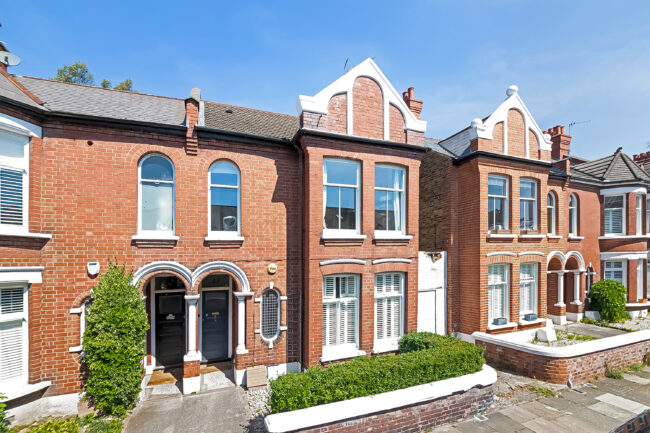
South London is famous for its “Period Pieces.” However, converting a 150-year-old house into three or four separate dwellings creates unique structural stresses.
In places like Bromley and Crystal Palace, the “London Clay” soil is notorious for seasonal movement. Victorian buildings were designed to “breathe” and move slightly. When they are carved up into flats, often with internal walls removed to create that “boujee” open-plan living space, structural integrity can be compromised if not done correctly.
RICS Technical Red Flag: A common issue we find is “telegraphing” damp and acoustic failure. In your RICS Level 2 or Level 3 survey, we look for signs of historic movement and poor conversion practices. Is that damp patch near the window just “condensation,” or is it a failure in the masonry that the freeholder is refusing to fix? We’ll tell you the truth.
5. Overlooking “Restrictive Covenants” (The “No Pets” Trap)
Imagine moving into your dream Dulwich apartment only to find out your beloved French Bulldog, Hugo, is legally barred from the premises.
Leaseholds are riddled with restrictive covenants. These can range from the reasonable (no loud music after 11 PM) to the draconian (no pets, no subletting on Airbnb, or even no hanging laundry on the balcony). If you’re a “digital nomad” or a hipster entrepreneur planning to run a business from your spare room, you need to check if the lease allows “business use.”
While your solicitor identifies these, a RICS surveyor provides the context. We know the types of blocks in South London that are historically litigious versus those that are more relaxed.
6. The “DIY Survey” Delusion
The biggest mistake? Thinking a mortgage valuation is the same as a survey. A mortgage valuation is for the lender’s benefit: it’s a quick check to ensure the property is worth what they’re lending. It won’t tell you that the chimney stack is leaning or that the timber joists in the bathroom are rotting.
In South London, where many properties have undergone DIY renovations during the various lockdowns, “hidden” issues are rampant. Whether it’s unpermitted loft conversions in Beckenham or dodgy plumbing in a Crystal Palace flat, a RICS Level 2 (Homebuyer Report) or Level 3 (Building Survey) is your only real protection.
A professional survey identifies:
- Damp and Timber Issues: Common in London’s older stock.
- Structural Movement: Evaluating those cracks you saw behind the sofa.
- Roof Condition: Using high-level binoculars to spot what’s happening three storeys up.
- Safety Issues: Identifying lead piping or outdated electrical systems.
7. Using a “Generalist” Solicitor
Leasehold law is a specialist field. Using a solicitor who spends most of their time dealing with freehold houses in the countryside is a recipe for disaster when dealing with a complex South London block.
You need someone who understands the nuances of the Leasehold Reform Act and the specific management companies that operate across Croydon and Bromley. A specialist will ensure that the “LPE1” (Leasehold Property Enquiries) form is scrutinised to the nth degree, looking for pending legal disputes between the freeholder and other tenants.
Why a RICS Surveyor is Non-Negotiable in South London
At South Surveyors, we don’t just “check boxes.” We understand the local geography. We know how the London Clay behaves under the foundations of a Crystal Palace villa. We know the common failings of the mid-century blocks in Croydon.
Buying a leasehold is a major financial commitment. It’s about more than just the four walls; it’s about the legal framework that holds those walls together. A RICS survey provides:
- Peace of Mind: Knowing that your “boujee” investment isn’t a money pit.
- Negotiation Power: If we find £10,000 worth of essential repairs, you can use our report to negotiate a price reduction.
- Expert Advice: We explain technical jargon in plain English (with a touch of charm).
Summary: Your South London Leasehold Checklist
Before you sign on the dotted line for that stunning flat, run through this quick RICS-approved mental checklist:
- Lease Term: Is it over 85 years? (Give yourself a buffer before the 80-year cliff).
- Ground Rent: Is it fixed, or does it double?
- Service Charge: Is it realistic, or suspiciously low? (Low can mean “no maintenance being done”).
- Sinking Fund: Is there a pot of money for future repairs?
- The “Vibe” Check: Does the exterior of the building look as good as the interior? (If the outside is crumbling, your service charge is going up).
- The Professional Survey: Have you booked your RICS Level 2 or 3?
Don’t let the excitement of a South London postcode blind you to the technical realities of leasehold ownership. With the right team: a specialist solicitor and a savvy RICS surveyor: you can secure your slice of London with total confidence.
Ready to make your move in Bromley, Dulwich, or beyond? Let’s make sure that dream home has a foundation as solid as your taste in coffee.