

Buying a home in South London is an exciting milestone, but it often comes with a nagging fear: what if your dream property is hiding costly secrets? The thought of unforeseen repairs turning your investment into a ‘money pit’ can be overwhelming. You know a survey is essential, but you might be wondering if the most comprehensive option-the level 3 building survey-is truly necessary, or if the final report will be just a list of confusing technical problems you don’t know how to act on.
This guide is designed to cut through that confusion and give you the clarity you need. We will walk you through exactly what this detailed RICS inspection covers, identify which types of properties benefit most from it, and explain how to leverage your report as a powerful tool for renegotiation. By the end, you’ll understand the true condition of your potential home, feel equipped to plan for future maintenance, and have the real confidence to proceed with one of life’s biggest purchases.
What is a RICS Level 3 Building Survey?
A RICS Level 3 Building Survey is the most comprehensive and detailed property inspection available in the UK, providing you with the clarity and confidence needed to make a major investment decision. Regulated to the highest industry standards by the Royal Institution of Chartered Surveyors (RICS), this report offers an in-depth assessment of a property’s condition and structural integrity.
Formerly known as a ‘Full Structural Survey’, the name was updated to better reflect its purpose. The primary goal of a level 3 building survey is to give you, the buyer, a complete and transparent picture of the property, highlighting any existing or potential issues before you commit to the purchase. This thorough examination helps you avoid unforeseen repair costs and provides a solid basis for negotiation.
For a clear visual explanation of what this detailed survey involves, watch this helpful video:
When is a Level 3 Survey the Right Choice?
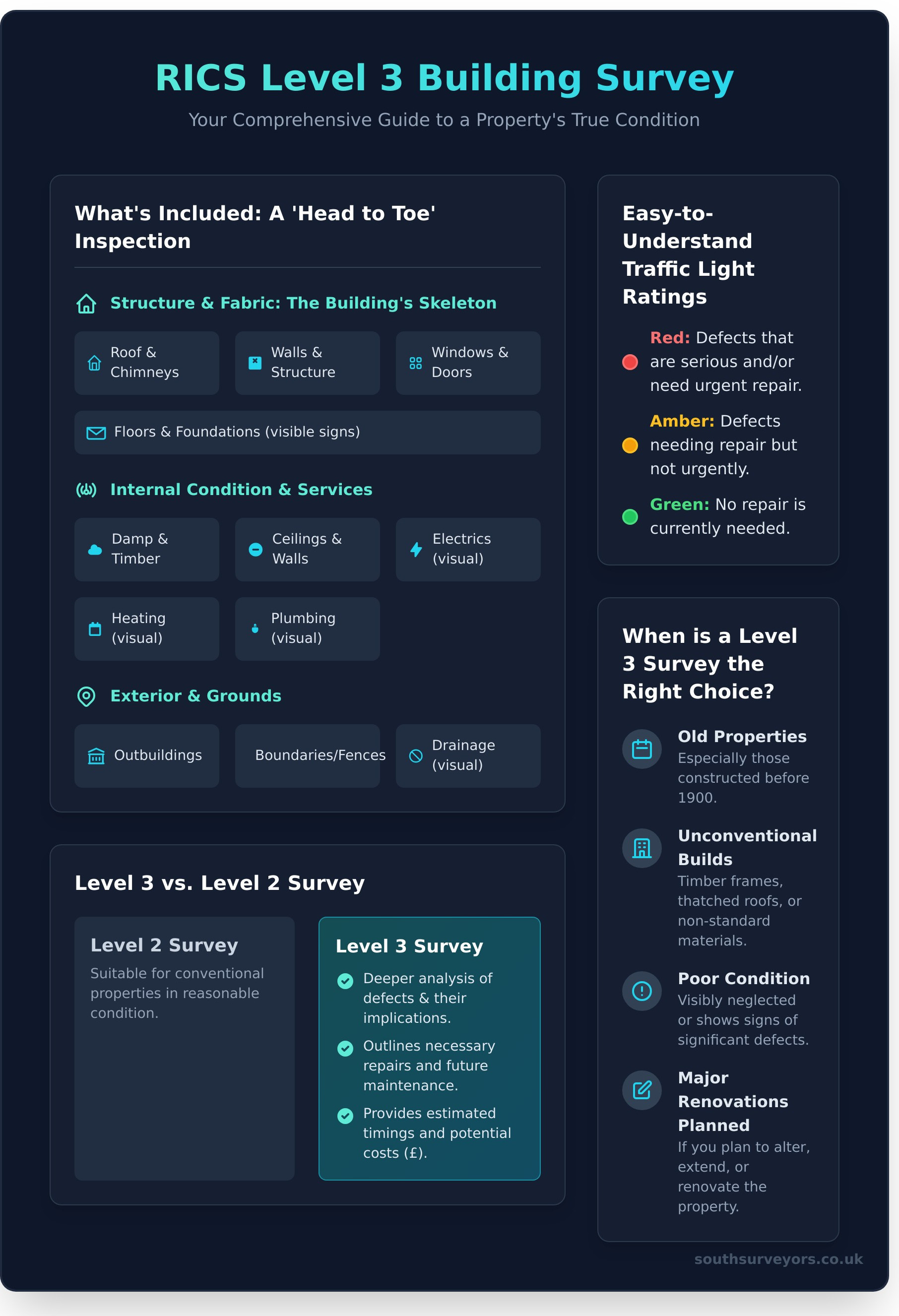
Investing in this detailed survey is a prudent choice for specific types of properties where the risks are higher. We strongly recommend a Level 3 survey in the following circumstances:
- The property is particularly old, especially if it was constructed before 1900.
- It is built with unconventional materials or methods, such as a timber frame or a thatched roof.
- The building is visibly in poor condition, has been neglected, or shows signs of significant defects.
- You are planning to undertake major renovations, alterations, or extensions after purchase.
The Key Differences: Level 3 vs. Level 2 Survey
While a Level 2 Survey is suitable for conventional properties in reasonable condition, the Level 3 survey provides a much deeper analysis. It not only identifies defects but also describes their potential implications, outlines necessary repairs, and provides estimated timings and potential costs in pounds (£). This level of detail is crucial for complex properties, empowering you with the expert knowledge needed to proceed with real confidence. (For a full breakdown, please see our detailed guide comparing survey levels).
What’s Included? A Detailed Look Inside a Level 3 Survey
A RICS level 3 building survey provides the most comprehensive, ‘head to toe’ inspection of a property’s condition available. It is a non-invasive assessment, meaning the surveyor will inspect everything that is visible and safely accessible without causing damage, such as lifting floorboards or drilling into walls. The goal is to provide you with complete clarity and confidence before you commit to a purchase.
The final report is designed to be thorough yet easy to understand. It uses a clear ‘traffic light’ system (red, amber, green) to rate the condition of each element of the property, immediately highlighting areas that require urgent attention. Each rating is supported by detailed descriptions, high-quality photographs of any defects found, and professional advice on necessary repairs, potential costs, and ongoing maintenance.
Structure and Fabric: The Building’s Skeleton
The surveyor conducts a meticulous examination of the property’s core components to identify any structural issues or significant defects. This includes:
- Roof: The construction type, coverings, flashings, drainage systems, and chimneys are all thoroughly assessed for signs of wear, damage, or leaks.
- Walls: Both internal and external walls are checked for evidence of structural movement, cracking, damp penetration, and insulation issues.
- Windows and Doors: The condition, materials, and energy efficiency of all windows and doors are reviewed.
- Foundations and Floors: The surveyor will look for visible signs of subsidence, heave, or settlement that could indicate foundational problems.
Internal Condition and Services
Inside the property, the focus is on the condition of finishes and the state of essential services. The inspection covers:
- Dampness and Timber Defects: Comprehensive checks are carried out for rising damp, condensation, rot, and wood-boring insect infestations.
- Ceilings, Walls, and Partitions: These are inspected for cracks, movement, and other defects that may point to underlying problems.
- Services: A visual inspection of the plumbing, wiring, and heating systems is performed. Please note: while our surveyors report on visible defects, services are not tested for functionality.
The Property’s Exterior and Grounds
The assessment extends beyond the main building to include the entire property plot. Our RICS-certified surveyors will examine:
- Outbuildings: Garages, sheds, and other permanent structures are inspected to the same high standard as the main house.
- Grounds: The condition of boundaries, fences, paths, driveways, and retaining walls is assessed for safety and stability.
- Drainage: A visual inspection of surface water and foul drainage systems is conducted where manholes and inspection chambers are accessible.
This exhaustive inspection ensures you have a complete understanding of the property’s health. Have a specific concern? Get a free quote and discuss it with our experts.
The Survey Process: From Booking to Actionable Report
Understanding the journey from instructing a surveyor to receiving your final report can provide significant peace of mind. We have refined our process to be as clear and straightforward as possible, ensuring you feel supported and informed at every stage. The first and most crucial step is choosing a firm that is RICS-regulated and fully insured, guaranteeing professionalism and accountability.
Step 1: Booking and Initial Consultation
Booking your survey is simple. Once you provide the property’s address and key details, we handle the logistics, including arranging access with the estate agent or vendor. This is the perfect time to tell us about any specific worries you have, whether it’s a crack you noticed during a viewing or concerns about damp. This allows our surveyor to give these areas special attention. Choosing a surveyor with deep local knowledge, for instance of common issues in South London’s Victorian housing stock, adds an invaluable layer of expert insight.
Step 2: The On-Site Inspection Day
A RICS-certified Chartered Surveyor will visit the property to conduct the inspection. A comprehensive level 3 building survey is a thorough investigation and typically takes several hours, sometimes a full day for larger or more complex properties. The surveyor will methodically assess all accessible parts of the building, from the roof structure and chimneys down to the drainage and foundations, meticulously documenting their findings as they go.
Step 3: Receiving and Understanding Your Report
Within 5-7 working days of the inspection, you will receive your detailed report. We design our reports for absolute clarity, providing:
- An executive summary of the key findings.
- A simple traffic light (red, amber, green) rating for the condition of different elements.
- Detailed sections with photographic evidence and advice on repairs and maintenance.
Crucially, we follow up with a phone call to walk you through the report. This is your opportunity to ask questions and discuss the implications of our findings, giving you the real confidence needed to make your next move.
How to Use Your Level 3 Survey for Maximum Advantage
Receiving your comprehensive report isn’t the end of the process; it’s the beginning of making a truly informed decision. Rather than viewing it as a list of problems, think of your level 3 building survey as a powerful asset. It provides the impartial, expert evidence you need to protect your investment, negotiate effectively, and plan for the future with genuine peace of mind. Investing in this thorough inspection can save you thousands of pounds in unforeseen repair costs.
Renegotiating the Purchase Price
One of the report’s most immediate benefits is its use as a negotiation tool. When the survey identifies ‘red’ (urgent and serious) or ‘amber’ (requires repair) defects that carry significant costs, you are in a strong position to renegotiate. A professional approach involves:
- Obtaining at least two quotes from qualified tradespeople for the specific works recommended in the report.
- Presenting the relevant sections of the survey and the quotes to the seller’s agent as factual evidence.
- Submitting a revised offer that fairly reflects the unexpected costs you will have to bear.
This evidence-based strategy ensures your negotiations are based on professional RICS-backed findings, not just opinion.
Budgeting for Future Repairs and Maintenance
Your survey is more than just a pre-purchase document; it’s a detailed owner’s manual for your new property. It gives you a clear understanding of the condition and expected lifespan of key components, from the roof structure to the heating system. Use it to create a prioritised maintenance schedule and budget accurately for future works. Knowing that the boiler may need replacing in five years, or that the windows will require attention, allows you to plan financially and avoid unwelcome surprises.
Making the Decision to Walk Away
Sometimes, the most valuable outcome of a survey is the confidence it gives you to walk away from a purchase. If the report uncovers issues so severe-such as major structural movement or widespread, costly damp-that the property is unviable, the survey has done its job perfectly. The fee for the survey is a minor expense compared to the potentially disastrous financial and emotional cost of buying a property with overwhelming problems. This expert insight empowers you to make the right decision, even when it’s a difficult one.
Ultimately, a thorough report puts you in complete control. Our RICS-certified surveyors are dedicated to providing the clarity you need to proceed with real confidence.
Why Choose South Surveyors for Your Level 3 Survey?
Choosing the right surveyor is as important as choosing the right property. An in-depth level 3 building survey is a significant investment, and you need a team you can trust to provide the clarity and confidence required to make a sound purchasing decision. At South Surveyors, our entire service is built around this principle. We are committed to delivering professional, reliable, and easy-to-understand advice tailored to your specific needs.
Our goal is to demystify the condition of your potential new home, empowering you with the knowledge to proceed, renegotiate, or walk away. We combine technical expertise with a client-focused approach, ensuring you feel supported at every step.
RICS-Certified Professionals
Your peace of mind is our priority. As a firm regulated by the Royal Institution of Chartered Surveyors (RICS), we adhere to the highest industry standards of quality and ethics. Our commitment to excellence includes:
- Full Regulation: Our work is held to the strict RICS code of conduct, guaranteeing a professional and impartial service.
- Comprehensive Insurance: We carry full professional indemnity insurance, offering you complete protection and assurance.
- Ongoing Development: Our surveyors are committed to continuous professional development, staying up-to-date with the latest regulations and building practices.
Jargon-Free Reports and Personal Support
We believe a survey report is only valuable if it is understood. That’s why we strip away the technical jargon and present our findings in plain, accessible English. Our reports focus on clear, actionable advice, so you know exactly what the issues are and what to do next. We don’t just send a document and disappear; every client receives a follow-up call from their surveyor to walk through the report, ensuring you can ask questions and fully grasp the details.
Local South London Expertise
South London’s property landscape is unique. Our team specialises in this area, possessing deep, practical knowledge of its diverse housing stock-from common defects in Victorian and Edwardian terraces to the specific challenges of modern builds. This understanding of local building practices, materials, and even geology allows us to provide a more insightful and relevant level 3 building survey. We know what to look for because we see it every day.
Ready to move forward with real confidence? Get your instant, no-obligation quote for a Level 3 Survey today.
Your Path to an Informed Property Purchase
Ultimately, a RICS Level 3 Building Survey is your most powerful tool for turning uncertainty into confidence. As we’ve explored, this comprehensive inspection provides not just a detailed list of a property’s condition, but a clear roadmap for negotiation, budgeting, and future maintenance. It’s the key to making a truly informed decision and protecting what is likely your most significant investment.
Choosing the right partner for this crucial step is paramount. At South Surveyors, our team of experts, Regulated by RICS, combines deep local knowledge of South London properties with a commitment to delivering clear, jargon-free reports. We provide dedicated post-survey support to ensure you have complete clarity. Investing in a professional level 3 building survey with us provides the peace of mind you deserve before you commit.
Ready to move forward with real confidence? Request a free, instant quote for your Level 3 Building Survey today and take the definitive step toward securing your new home.
Frequently Asked Questions About the RICS Level 3 Building Survey
How much does a RICS Level 3 Building Survey cost?
The cost of a Level 3 Building Survey is influenced by the property’s size, age, value, and location. In the UK, prices typically range from £600 to over £1,500. A larger, older, or more complex property will command a higher fee. While it is a significant investment, this comprehensive report provides the clarity and confidence needed to proceed, potentially saving you thousands in unforeseen repair costs and strengthening your negotiating position.
How long does it take to get the survey report back?
You can typically expect to receive your comprehensive report within 5 to 7 working days following the surveyor’s physical inspection of the property. At South Surveyors, our RICS-Certified professionals understand the time-sensitive nature of property transactions. To provide immediate peace of mind, your surveyor will often call you on the day of the inspection to provide a verbal summary of any significant findings ahead of the full written report.
Can a Level 3 survey find every single problem with a house?
A level 3 building survey is the most thorough, non-intrusive inspection available, designed to identify the vast majority of visible and accessible defects. However, surveyors cannot see through walls, lift floorboards, or inspect areas that are concealed or unsafe. If our expert surveyor suspects a hidden issue, such as concealed damp or structural movement, they will clearly recommend further specialist investigation, ensuring you have a complete picture before you buy.
Do I still need a survey if my mortgage lender is doing a valuation?
Yes, it is crucial to understand the difference. A mortgage valuation is a brief assessment conducted for your lender to confirm the property is adequate security for the loan. It is not a survey and will not detail the property’s condition for you. An independent survey is a thorough inspection conducted solely for your benefit, empowering you to make an informed decision and avoid potentially expensive surprises after you move in.
Is a Level 3 survey necessary for a new-build property?
For most new-builds, a professional Snagging Survey is the standard recommendation to identify cosmetic and functional defects. However, a Level 3 survey may be advisable if the property uses unconventional construction methods or if you have specific, significant concerns about its build quality. We recommend discussing your circumstances with a RICS-Certified surveyor to determine the most appropriate service for your peace of mind and protection. If you’re a first-time buyer navigating the complexities of purchasing a new-build in South London, understanding first time buyer stamp duty changes in 2026 can help you budget more effectively for your total purchase costs alongside your survey fees.
What’s the difference between a surveyor and a structural engineer?
A RICS surveyor provides a holistic assessment of the property’s overall condition, identifying a wide range of potential issues from the roof to the drains. A structural engineer is a specialist who focuses exclusively on the structural integrity of a building-its foundations, beams, and load-bearing elements. If a surveyor’s report flags a potentially serious structural concern, they will recommend you instruct a structural engineer for a more detailed, expert analysis.