

A newly discovered crack in a wall can be a source of significant worry for any homeowner. Your mind might immediately jump to the worst-case scenario, picturing spiralling repair costs and structural danger. Is it simply the house settling, or could it be a sign of a more serious issue like subsidence? The uncertainty alone can be overwhelming, leaving you unsure of what to look for or who to trust for reliable advice.
This comprehensive guide is designed to replace that anxiety with clarity and confidence. We will demystify the technical jargon and provide you with a clear, easy-to-understand overview of the key signs and most common causes of subsidence in UK properties. You will learn how to spot potential warning signs and gain a reliable, step-by-step plan of action, starting with the essential first step to protecting your investment: commissioning a thorough, professional RICS survey to gain true peace of mind.
Understanding Subsidence: What It Is (And What It Isn’t)
When it comes to property issues, the term ‘subsidence’ often causes significant concern for homeowners. Providing clarity is the first step to achieving peace of mind. In simple terms, subsidence is the downward movement of the ground that supports a building’s foundations, where this movement is unrelated to the building’s own weight. This complex issue, as detailed in this overview of What is Subsidence?, can compromise a property’s structural integrity because the movement is often localised and uneven. Understanding the exact nature of this ground movement is the first step toward a professional, effective solution.
To help visualise this process, the following video provides a clear explanation:
Subsidence vs. Settlement: The Key Difference
It is crucial for property owners to distinguish between subsidence and settlement, as they have very different implications. While both involve downward movement, their causes and the level of professional concern they warrant are vastly different. An expert RICS-certified surveyor can provide the clarity you need to understand your property’s condition.
- Settlement is the natural, uniform compression of the ground due to the building’s own weight. It typically occurs in the first few years after construction and is generally not a cause for alarm. The movement is predictable and affects the entire structure evenly.
- Subsidence, however, is a localised sinking of the ground caused by external factors changing the soil conditions beneath the foundations. This movement is often uneven, placing significant stress on the building’s structure and requiring expert investigation.
Heave and Landslip: Other Forms of Ground Movement
To provide complete clarity, it’s also helpful to be aware of two other types of ground movement that can affect properties, particularly in varied terrains:
Heave is the opposite of subsidence-an upward movement of the ground. This is most common in London’s clay-rich soils, often occurring when a large tree is removed, causing the ground to rehydrate and swell. Landslip (or landslide) is a sideways movement of earth, which affects properties built on or near slopes and embankments.
Identifying the correct type of ground movement is a critical task for a RICS-certified surveyor. An accurate diagnosis ensures that the right remedial action is taken, providing you with the confidence to make an informed decision and protect your investment.
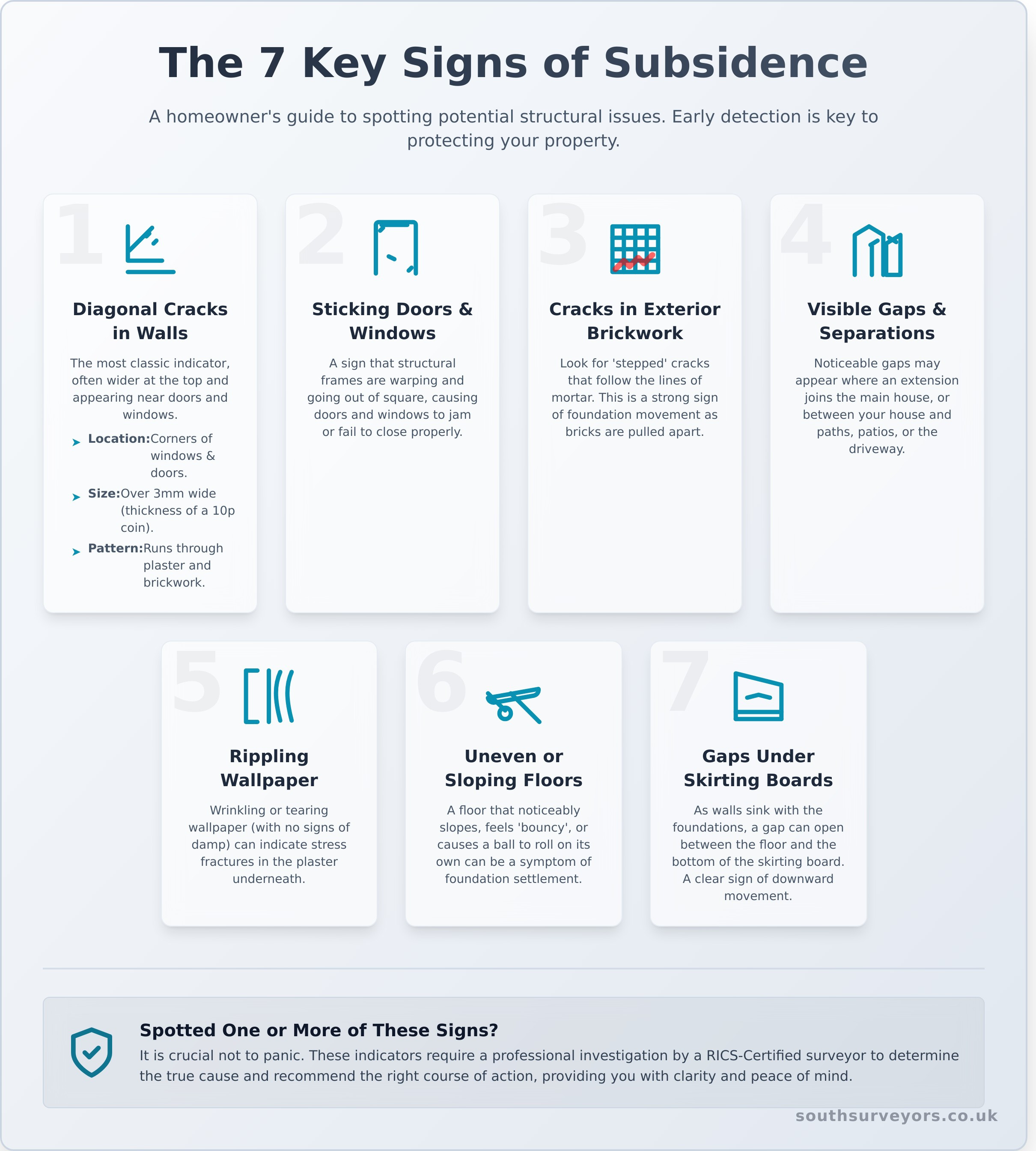
The 7 Key Signs of Subsidence to Look For in Your Property
Identifying the early warning signs of subsidence is the first step toward protecting your property investment. Subsidence occurs when the ground beneath your home sinks or settles, compromising the structural integrity of your foundations. This can be caused by various factors, from clay soil shrinkage in dry weather to leaking drains or even large-scale human activities causing subsidence in a wider area. Providing clarity and confidence, this guide outlines the seven key visual cues that warrant a professional assessment.
1. Diagonal Cracks in Walls
The most classic indicator is the sudden appearance of diagonal cracks, both internally and externally. These cracks are often wider at the top than the bottom, forming a V-shape, and typically appear around weak points like doors and windows.
- Location: Most common at the corners of windows and door frames.
- Size: Usually wider than a 10p coin’s thickness (over 3mm).
- Pattern: They often run through both the plaster and the brickwork or blockwork beneath.
2. Sticking Doors and Windows
When a building’s foundations shift, it can cause structural frames to warp and go out of square. This distortion puts pressure on door and window frames, causing them to jam, stick, or fail to close properly. While this can have other causes, it becomes a significant red flag when noticed alongside other signs like cracks.
3. Cracks in Exterior Brickwork
Look for ‘stepped’ cracks on the outside of your property that follow the lines of the mortar between bricks. This type of cracking is a strong sign of foundation movement, as the bricks themselves are not breaking, but are being pulled apart along their weakest points.
4. Visible Gaps and Separations
Significant ground movement can create noticeable gaps where different parts of your property meet. Pay close attention to the join between an extension and the main house, as this is a common area for separation to occur. You might also spot new or widening gaps between your house and surrounding paths, patios, or your driveway.
5. Rippling or Crinkled Wallpaper
Wallpaper that is wrinkling, crinkling, or tearing in areas with no signs of damp may be indicating a stress fracture in the plaster underneath. This is often visible in corners or near the ceiling line. In some cases, it can be a sign that a previous owner has attempted to cover up an existing issue, making a professional inspection essential.
6. Uneven or Sloping Floors
A floor that has begun to noticeably slope, or feels ‘bouncy’ or uneven underfoot, can be a symptom of foundation settlement. You may notice this when a piece of furniture that once sat level now leans, or a ball rolls across the floor on its own.
7. Gaps Between Skirting Boards and Floors
As walls begin to sink with the foundations, a gap can open up between the bottom of the skirting board and the floor itself. This is a clear and easily measurable sign of downward movement and should be investigated promptly.
If you have noticed one or more of these signs, it is crucial not to panic. These indicators require a thorough and professional investigation by a RICS-Certified surveyor to determine the cause and recommend the right course of action, giving you peace of mind.
What Causes Subsidence? Common Culprits in South London & the UK
Understanding the root cause of ground movement is the first step toward a reliable solution and achieving peace of mind. Subsidence occurs when the ground beneath a property loses its load-bearing capacity, causing the foundations to sink. While the visible signs like cracks can be alarming, they are often linked to a few common and identifiable issues, particularly within the unique geology of London and the South East.
Our RICS-Certified surveyors provide a comprehensive diagnosis, but here are the principal causes we frequently encounter.
Clay Soil Shrinkage
The single most common cause of subsidence in South London and across the South East is the region’s shrinkable clay soil. During prolonged dry spells or heatwaves, this type of soil loses moisture and contracts in volume, causing the ground to sink. When the rains return, it swells back up. This constant movement can compromise your property’s foundations, directly leading to the diagonal cracks often seen around windows and doors.
Tree Roots
Large, mature trees and shrubs can draw vast quantities of water from the soil, a process known as desiccation. This effect is significantly amplified in clay soils, accelerating shrinkage near the tree. If these trees are planted too close to a property, their root systems can cause localised ground movement. High-risk species include:
- Oak
- Willow
- Poplar
- Ash
Leaking Drains and Water Mains
A different kind of water problem can also lead to ground instability. A leaking drain, water main, or damaged guttering can saturate the ground over time. In granular soils like sand or gravel, this can wash away the fine particles that support the foundations, creating a void. In clay soils, it can soften the ground, reducing its ability to support weight. This is a particular risk for older London properties with original, aging clay pipework.
Mining and Quarrying History
While far less common in the London area, historical mining activity is a known cause of ground instability in other parts of the UK, such as Wales, the North of England, and the Midlands. The collapse of old, unrecorded mine shafts or quarries can cause sudden and severe ground movement. Understanding these varied causes is a key part of recognizing ground subsidence and ensuring the correct remedial action is taken.
I Suspect Subsidence – What Are The Correct Next Steps?
Seeing potential signs of structural movement in your London home can be deeply unsettling. However, the key is to act methodically, not to panic. Following a clear, logical process will provide you with the clarity and confidence needed to understand the issue and manage the situation effectively. This step-by-step guide will take you from initial worry to a structured plan of action.
Step 1: Don’t Panic and Don’t Ignore It
While ignoring the problem is never the answer, immediate panic is also counterproductive. It’s important to remember that most structural issues, when identified early, are entirely manageable. Your first instinct might be to fill in any visible cracks to make them disappear, but we strongly advise against this. Attempting DIY repairs can mask crucial evidence that a professional needs to assess the pattern, severity, and underlying cause of the movement. A calm, observant approach is far more valuable at this stage.
Step 2: Contact a RICS Chartered Surveyor
Your essential first professional contact should be an independent, RICS-certified surveyor. This is a critical distinction: while a builder can repair damage, only a qualified surveyor has the diagnostic expertise to identify the root cause of the problem. They are trained to differentiate between issues like subsidence, normal settlement, or thermal movement. A comprehensive Level 3 Building Survey is the definitive tool for investigating these concerns, as it involves a thorough inspection and provides a detailed analysis of the property’s structural integrity. This professional assessment is the factual foundation for all subsequent actions, ensuring you make informed decisions. Get clarity with a professional RICS survey.
Step 3: Inform Your Insurer
Once you have a professional report from your surveyor, you are in a much stronger position to contact your buildings insurance provider. Approaching your insurer armed with a detailed, impartial assessment from a RICS-regulated expert provides credible evidence to support your claim. This report empowers you, transforming the conversation from one of uncertainty to one based on clear, expert findings. It ensures you understand the full scope of the issue before initiating the official claims process, giving you greater control and the peace of mind that comes with being well-prepared.
How Is Subsidence Investigated and Fixed?
Discovering potential signs of subsidence can be worrying, but the path to resolving it is a methodical and well-established process. A RICS-certified surveyor’s role extends beyond the initial diagnosis; they oversee the investigation to ensure the correct solution is implemented, providing you with clarity and confidence. The good news is that the fix is often far less dramatic and invasive than many homeowners fear.
The Investigation Phase: Monitoring
Once subsidence is suspected, the first professional step is to determine if the movement is ongoing. This is typically achieved by installing small, precise devices called crack monitors across the principal cracks. Your surveyor or a structural engineer will then monitor these devices over a period of 3 to 12 months. This crucial data-gathering phase confirms whether the property is still moving and helps to identify the seasonal patterns that point directly to the underlying cause.
Common Solutions and Repairs
In most cases, the solution involves addressing the cause of the movement rather than performing major surgery on the building itself. Once the monitoring phase confirms the cause and the property has stabilised, the focus shifts to straightforward, targeted repairs. Common solutions include:
- Tree Management: If thirsty tree roots are drawing moisture from the soil, a professional arboriculturist may recommend crown reduction or, in some cases, complete removal of the problematic tree.
- Drainage Repairs: Leaking or broken drains that are washing away or softening the soil can be repaired or replaced, which is a common and highly effective fix.
- Structural Repairs: After movement has ceased, cosmetic and minor structural damage, such as cracked brickwork, can be repaired using specialised techniques like resin bonding or crack stitching to restore the building’s integrity.
Underpinning: The Last Resort
Underpinning-the process of strengthening a property’s existing foundation by extending it to a deeper, more stable level of soil-is the solution most people associate with subsidence. However, it is a major, expensive, and disruptive process reserved for the most severe cases. Reassuringly, the Association of British Insurers (ABI) confirms that less than 10% of valid subsidence claims end in underpinning. For the vast majority of London properties, simpler, less invasive solutions are all that is required.
Navigating the complexities of a property issue requires expert guidance. If you have concerns about your home, our RICS-certified team can provide a comprehensive assessment. Contact South Surveyors for professional advice and peace of mind.
Navigating Subsidence Concerns with Expert Guidance
Understanding the signs and causes of subsidence is the first crucial step for any homeowner. While diagonal cracks and sticking doors can be alarming, remember that early identification and a methodical approach are key to managing the issue effectively. The most important action you can take is to avoid guesswork and seek a professional, expert assessment to determine the true extent of the problem.
At South Surveyors, our RICS-regulated team provides that expert clarity. We combine deep local expertise in South London’s unique properties and soil types with a commitment to delivering clear, comprehensive reports that help you make informed decisions. Adhering to the highest professional standards, we give you the confidence to move forward.
Don’t let uncertainty linger. Spotted a crack? Get clarity and confidence with a RICS Building Survey. Taking decisive action is the best way to protect your investment and secure your peace of mind.
Frequently Asked Questions About Subsidence
Does buildings insurance cover subsidence?
Most standard UK buildings insurance policies provide cover for damage caused by subsidence, but it’s essential to check your specific policy details. These claims almost always come with a significant excess, typically £1,000 or more. Insurers may also have specific exclusions for properties with a known history of movement if it was not declared when the policy was taken out. Always review your documents carefully to understand the extent and limitations of your cover.
How much does it cost to fix subsidence?
The cost to fix subsidence varies dramatically depending on the cause and the extent of the damage. Minor crack repairs and monitoring may cost a few thousand pounds. However, more extensive work, such as underpinning a section of the property, can range from £10,000 to £50,000 or more for a typical London home. A professional assessment by a structural engineer is crucial to determine the exact scope of work and receive an accurate cost estimate.
Can I sell a house that has had subsidence in the past?
Yes, you can absolutely sell a property with a history of subsidence. The key to a successful sale is transparency and comprehensive documentation. If the issue has been professionally rectified and you can provide all relevant paperwork, such as a Certificate of Structural Adequacy and details of the insurance claim, buyers and their mortgage lenders are generally reassured. This demonstrates that the problem has been resolved to the highest industry standards, providing complete peace of mind.
How long do I have to declare subsidence when selling?
In the UK, there is no time limit; you must always declare a history of subsidence when selling a property. It is a legal requirement to disclose this information on the TA6 Property Information Form, regardless of how long ago the issue occurred and was resolved. Being upfront is essential, as failing to disclose this material fact can lead to the buyer taking legal action against you for misrepresentation after the sale has completed.
Will subsidence devalue my property?
A history of subsidence can reduce a property’s market value, primarily because it can make the home more difficult to insure or mortgage. However, the impact is significantly less if the problem is historic and has been professionally repaired with full documentation. An active, unresolved issue will have a much greater negative effect on value. A RICS-certified surveyor can provide a professional valuation that accurately reflects the property’s condition and history.
What should I do if I’m buying a house and the survey finds subsidence?
If your property survey uncovers potential subsidence, the first step is to get a more detailed, specialist assessment from a structural engineer. This expert report will provide clarity on the cause, the severity of the issue, and the likely cost of repairs. Armed with this professional advice, you can make an informed decision: either renegotiate the asking price, request the current owner fixes the issue before you complete, or, if the risk is too high, withdraw your offer.