

You’ve found the perfect flat, but now you face a crucial decision that can feel both costly and complex. With different survey options available, many prospective buyers find themselves asking, is a level 3 survey worth it for a flat? It’s a common and valid question, especially when balancing thorough due diligence with a budget. The thought of paying for the most detailed inspection can seem excessive for a leasehold property, yet the risk of missing a significant structural issue could lead to thousands of pounds in unforeseen repair costs.
This comprehensive guide is designed to provide the clarity and confidence you need to navigate this choice. We will demystify the process, breaking down what a RICS-Certified Level 3 Survey covers in the context of a flat, from the internal structure to shared communal areas. We’ll explore the key situations where this level of inspection is essential and help you weigh the investment against the long-term financial security it can provide. Our goal is to empower you to make a truly informed decision, ensuring your new home is a source of peace of mind, not unexpected problems.
Key Takeaways
- A Level 3 Survey provides the most comprehensive structural assessment available, identifying hidden defects and potential repair costs that a standard valuation will miss.
- Deciding if a level 3 survey is worth it for a flat often depends on specific risk factors like the building’s age, its condition, or if it has been significantly altered.
- The upfront cost of a thorough survey can lead to significant long-term savings, potentially saving you thousands of pounds (£) in unforeseen repairs or by strengthening your price negotiation position.
- Understanding the detailed findings of a Level 3 report empowers you to purchase with clarity and confidence, ensuring you know the true state of your investment.
Understanding the Level 3 Survey: What Does It Include?
A Level 3 Survey, often referred to as a full structural survey, is the most comprehensive property inspection available. Regulated by the Royal Institution of Chartered Surveyors (RICS), its purpose is to provide you with a detailed and thorough understanding of a flat’s condition, giving you the clarity and confidence to proceed with your purchase. It goes far beyond a mortgage valuation, focusing entirely on the structural integrity and state of repair of the property.
To better understand the key differences between the main survey types, this video offers a helpful overview:
The RICS-certified surveyor conducts an in-depth visual inspection of the flat and its associated communal areas where possible. This comprehensive building survey involves a meticulous assessment of the property’s construction and condition. The final report will provide you with:
- A detailed analysis of the property’s structure and fabric.
- Identification of any defects, their potential cause, and the urgency of repairs.
- Advice on necessary repairs, estimated costs, and future maintenance obligations.
What Flats Need a Level 3 Survey?
While not every flat requires this level of scrutiny, a Level 3 Survey is highly recommended for certain types. It is particularly beneficial for older properties, such as those in converted Victorian or Georgian buildings, flats that have been significantly altered or extended, or any property where you have specific concerns. These buildings often have unique challenges, including shared structural elements and complex leasehold responsibilities, which a thorough survey can help clarify.
Differences Between Level 2 and Level 3 Surveys
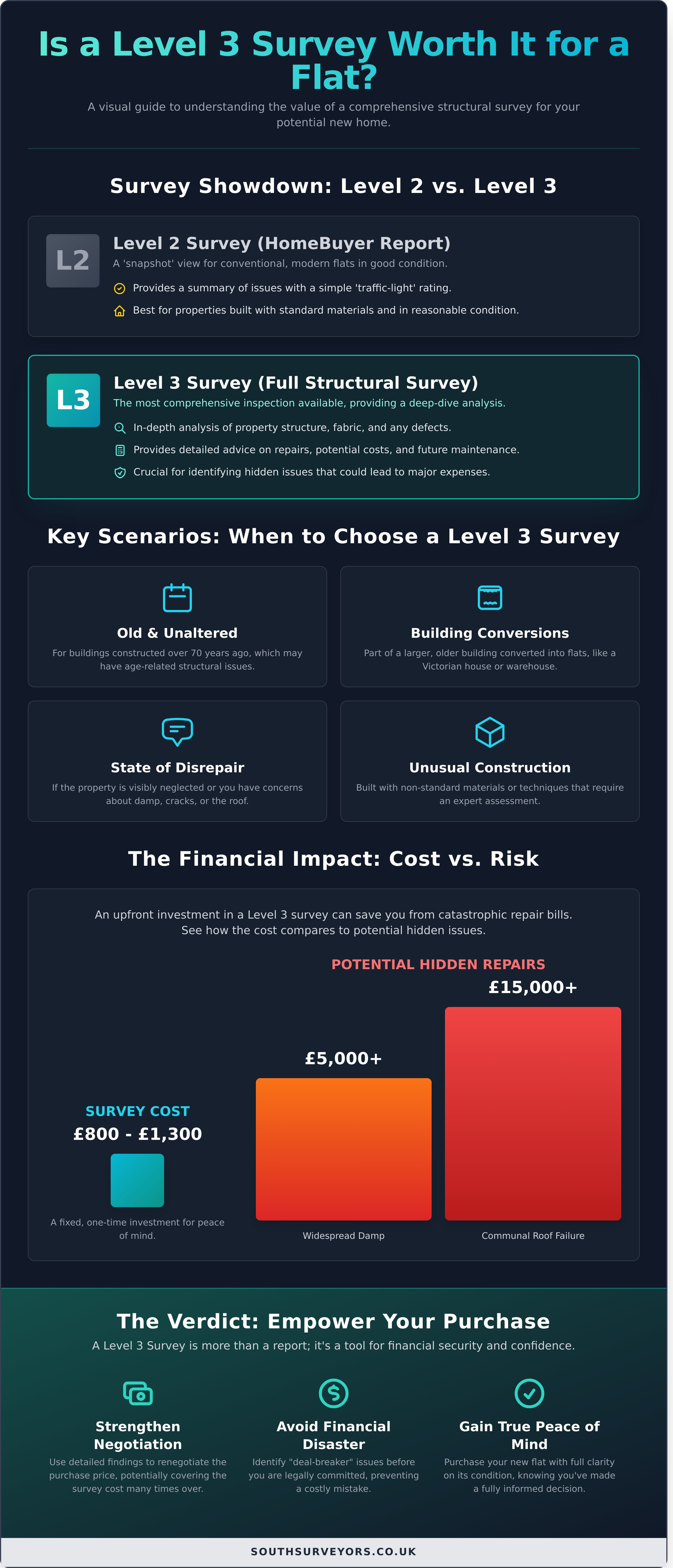
The primary difference lies in the level of detail. A Level 2 Survey (HomeBuyer Report) is suitable for conventional, modern flats in good condition, providing a summary of issues with a traffic-light rating. In contrast, a Level 3 Survey offers a far more in-depth analysis of defects and detailed advice on repairs. While a Level 3 survey costs more (typically starting from £600-£700+), this investment provides the critical information needed to decide if a level 3 survey is worth it for a flat with potential hidden problems, empowering you to renegotiate the price or plan for future works with complete peace of mind.
When Is a Level 3 Survey Worth It for a Flat?
While a Level 2 Survey is often suitable for modern, conventional flats, a Level 3 Survey provides essential protection in specific scenarios. Deciding if is a level 3 survey worth it for a flat depends on balancing the initial cost against the significant financial risks it can uncover. This comprehensive inspection is designed to deliver complete clarity and confidence, especially when dealing with properties that carry a higher degree of uncertainty. The official GOV.UK guide on home buying even highlights the importance of getting an independent survey to fully understand a property’s condition before you legally commit.
A Level 3 Survey is strongly recommended if the flat is:
- Old and Unaltered: Located in a building constructed over 70 years ago that may have hidden structural issues.
- A Conversion: Part of a larger, older building converted into flats, such as a Victorian house or a warehouse.
- In a State of Disrepair: Visibly neglected or if you have specific concerns about defects like damp, cracks, or roof integrity.
- Of Unusual Construction: Built with non-standard materials or techniques that require expert assessment.
Cost-Benefit Analysis
Investing approximately £800-£1,300 in a Level 3 Survey can save you thousands in the long run. For example, our RICS-Certified surveyors have identified issues like failed communal roof coverings costing over £15,000 to replace or widespread damp requiring £5,000 of specialist work. Armed with a detailed report, you can renegotiate the purchase price or even decide to walk away from a financially disastrous investment, providing invaluable peace of mind.
Expert Opinions and Testimonials
A common misconception is that you are only responsible for the interior of your flat. However, as our expert surveyors often explain, your leasehold agreement likely makes you liable for a share of the entire building’s upkeep. A Level 3 survey thoroughly investigates these communal areas and the overall structure, protecting you from unforeseen and costly service charge increases.
“The Level 3 report seemed excessive for a flat, but it uncovered serious historic movement in the main building. Our surveyor, Jazz, explained the implications clearly, allowing us to negotiate a £10,000 price reduction. It was the best money we spent during the entire process.” – Sarah K., Flat Buyer in Brighton
How to Prepare for a Level 3 Survey on Your Flat
Deciding to get a comprehensive survey is the first step towards a confident purchase. To get the most value from your investment, it’s essential to choose the right professional and understand how to act on their findings. This involves clear communication, asking the right questions, and knowing how to interpret the final report. Before the inspection, ensure the estate agent has arranged access to all relevant areas, including any communal spaces, lofts, or basements associated with the flat.
Choosing the Right Surveyor
The quality of your survey depends entirely on the expertise of the person conducting it. Your first priority is to ensure they are RICS-Certified, a standard that guarantees they operate with the highest professional integrity. When vetting potential surveyors, ask targeted questions to ensure they are the right fit:
- Do you have specific experience surveying flats in similar-aged blocks?
- Are you available for a follow-up call to discuss the report’s findings?
- What is your typical turnaround time for the report?
Finally, always evaluate past client feedback. Look for comments on thoroughness and clarity, as these are the hallmarks of a reliable, expert surveyor who can provide real peace of mind.
Understanding Your Survey Report
A Level 3 report is a detailed document, but it’s designed to give you clarity. It will typically use a traffic-light system (Red, Amber, Green) to categorise the urgency of any defects. ‘Red’ issues require immediate or expensive repairs, while ‘Green’ items are in good condition. You’ll encounter technical terms, but a good report will explain them. For example, ‘spalling’ simply means crumbling brickwork, and ‘damp ingress’ refers to water penetrating the structure.
The report’s conclusion is where you’ll see why a detailed inspection is so important, answering the question of is a level 3 survey worth it for a flat. It summarises the property’s overall condition and lists recommended actions. Your next steps could include getting quotes from tradespeople for repairs, using the findings to renegotiate the asking price, or making the informed decision to walk away. For expert guidance, our RICS-Certified team is always on hand to provide clarity and confidence.
The Financial Impact: Is It Worth the Investment?
When considering a significant purchase like a flat, every expense is scrutinised. It’s natural to ask: is a level 3 survey worth it for a flat from a purely financial standpoint? The answer becomes clear when you weigh the upfront cost against the potential for immense, unforeseen repair bills. Investing in a comprehensive survey is not just an expense; it’s a strategic financial decision that provides clarity and confidence.
A thorough survey empowers you with the detailed information needed to either proceed with your purchase, renegotiate the price based on identified defects, or walk away from a potentially costly mistake. This knowledge is your most powerful tool in the property buying process.
Breaking Down the Costs
The cost of a RICS Level 3 Survey for a flat typically ranges from £800 to over £1,500. This price is influenced by several key factors:
- Property Value and Size: Higher value and larger flats require more extensive assessment.
- Location: Costs can be higher in areas like London and the South East.
- Age and Complexity: Older, listed, or unusually constructed properties demand more of a surveyor’s time and expertise.
While it’s tempting to choose the cheapest option, the real value lies in the surveyor’s thoroughness. Instead of negotiating on price, focus on securing a detailed quote from a reputable, RICS-certified firm that outlines exactly what is covered.
Long-Term Investment Perspective
Viewing the survey fee as a long-term investment is crucial. Uncovering a significant issue, such as structural damp or a problem with the building’s roof (for which you may be liable for service charges), could save you thousands, or even tens of thousands, of pounds. The survey report provides the evidence needed to negotiate a lower purchase price, often covering the cost of the survey many times over.
Furthermore, this detailed report becomes a valuable part of your property’s history. When you decide to sell, having a comprehensive document detailing the flat’s condition can provide transparency and reassurance to potential buyers, potentially speeding up the sale. Understanding the full picture of your property from day one is the cornerstone of a sound investment. To make an informed decision, learn more about South Surveyors’ expertise in providing comprehensive, reliable reports.
The Final Verdict: Investing in Clarity and Confidence for Your Flat
Ultimately, the decision to get a Level 3 Survey for a flat hinges on the property’s specific circumstances. While not essential for every modern apartment, it becomes an invaluable tool for older, converted, or non-standard properties where hidden defects could lead to significant future costs. So, is a level 3 survey worth it for a flat? For buyers seeking the highest level of assurance, the detailed insight it provides is crucial for negotiating a fair price and avoiding expensive surprises down the line.
At South Surveyors, our RICS-Certified expertise ensures you receive a truly comprehensive flat assessment. We deliver personalized client reports that provide the clarity needed to make a fully informed decision. Investing in a thorough inspection is the most reliable way to protect what is likely to be one of your most significant purchases.
Ready to proceed with certainty? Discover our detailed Level 3 surveys and let our professional team provide the peace of mind you deserve.
Frequently Asked Questions
What exactly does a Level 3 survey cover in a flat?
A RICS Level 3 Home Survey provides the most thorough inspection available for a flat. Our expert surveyors conduct a detailed assessment of the property’s structure and fabric, including walls, roofs (where accessible), floors, and windows. The survey also considers the condition of communal areas like hallways, stairwells, and the main building structure, which are crucial for flat ownership. You receive a comprehensive report detailing defects, their potential causes, and advice on repairs and maintenance for your peace of mind.
What are the key differences between Level 2 and Level 3 surveys?
The primary difference lies in the level of detail. A Level 2 Survey is suitable for conventional properties in reasonable condition, providing a summary of defects. In contrast, a Level 3 Survey is a much more comprehensive inspection. It is designed for older, significantly altered, or poorly maintained properties, offering an in-depth analysis of the building’s construction and any defects found. It provides detailed advice on repairs, timings, and estimated costs, giving you complete clarity and confidence.
How much does a Level 3 survey typically cost for a flat?
The cost of a Level 3 survey for a flat in the UK typically ranges from £600 to £1,300. The final price depends on several key factors, including the flat’s size, age, listed status, and its purchase price. While it is a significant investment, this comprehensive report provides the detailed insight needed to avoid potentially thousands of pounds in unforeseen repair costs, empowering you to make a fully informed decision about your purchase.
Is a Level 3 survey necessary for new build flats?
For a brand new build, a full Level 3 survey is generally not necessary; a professional Snagging Survey is more appropriate to identify cosmetic and finishing issues. However, if the property is a conversion of an older building (e.g., a Victorian house converted into flats), then the answer to is a level 3 survey worth it for a flat is almost certainly yes. This is because the original, older structure could have hidden defects not addressed during the conversion process.
How can a Level 3 survey affect property negotiations?
A detailed Level 3 survey report is a powerful negotiation tool. If our RICS-Certified surveyor uncovers significant issues requiring costly repairs-such as damp, structural movement, or a failing roof on the block-you can use this evidence-based report. It allows you to request that the seller rectifies the issues before completion or to renegotiate the purchase price to reflect the future expenditure, potentially saving you a substantial amount of money and future stress.
What should I do if my survey reveals major issues?
Discovering major issues can be daunting, but our report is designed to provide clarity, not alarm. The first step is to discuss the findings with your surveyor, who will explain the implications in plain English. We provide an overview of the necessary repairs and potential costs. Armed with this expert information, you can decide whether to renegotiate the price with the seller, ask them to fix the issues, or, in serious cases, withdraw from the purchase with confidence.