

Staircasing is shared ownership’s glow-up moment: you buy a bigger slice of your home and (usually) pay less rent to the housing association. Lovely. But before you start mentally spending your future equity, there’s one very non-negotiable ingredient: a RICS private valuation.
If you’re searching for a South East London surveyor (hello, Beckenham), this guide explains what the valuation is, why it matters, what it typically costs, and how to avoid the classic staircasing pitfalls—without the waffle.
Understanding a Shared Ownership Valuation (aka: the number that drives the whole deal)
A shared ownership valuation sets the current open market value of your home on the valuation date. That figure is then used by your housing association to calculate the price of the extra share(s) you want to buy.
A key point people miss: staircasing is priced off today’s market, not what you paid originally. If values in Beckenham (or nearby pockets like Penge, Crystal Palace and Bromley) have moved since you bought, your staircasing cost moves with them. Yes, it’s very “London property market”, but it’s also exactly how the scheme is designed to work.
What makes it “RICS private valuation” territory?
Housing associations typically require an independent RICS Registered Valuer to provide a valuation report that follows the RICS Red Book standards (the professional rulebook for valuations). It’s not a casual “what’s it worth, mate?” estimate—it’s a structured, evidence-backed opinion of value.

Staircasing, step-by-step (so you don’t accidentally wing it)
Staircasing is simply buying additional shares in your home, usually in chunks, until you reach 100% (if your lease allows). With each staircasing purchase, your rent to the housing association typically reduces because you own more of the equity.
A typical staircasing journey looks like this:
-
Check your lease and housing association requirements
Most will specify the valuation must be completed by a RICS Registered Valuer, and they may require the report to be addressed in a particular way. -
Instruct a RICS private valuation
Your valuer inspects the property and researches comparable evidence (recent sold prices for similar homes). -
Receive the valuation report
This is the document your housing association uses to set the staircasing price. -
Housing association issues their offer / memorandum
They calculate the premium for the share you want to buy based on the valuation figure. -
Solicitors handle the legal work
This includes the lease variation/transfer pieces, lender requirements (if you’re remortgaging), and completion. -
Completion + updated ownership
If you staircased to 100%, rent usually drops away entirely. Whether you become freehold depends on your property type and scheme—many flats remain leasehold (just with 100% equity owned by you).
Valuation costs in Beckenham and South East London (what you’re actually paying for)
Professional RICS private valuations for shared ownership typically range from £250 to £900 + VAT, depending on complexity and value.
What your fee broadly covers:
- the inspection (time on site)
- market research and comparable selection
- analysis and professional judgement
- a RICS-compliant report written to meet housing association requirements
- professional risk/insurance obligations (valuations carry more liability than many people realise)
Typical pricing bands (illustrative):
Standard valuations (often ~£250–£350 + VAT):
- modern flats/houses
- standard construction
- straightforward access
- plenty of good comparable evidence nearby (common in much of South East London)
Higher-cost valuations (often ~£400–£900 + VAT):
- high-value homes (yes, parts of Beckenham can get spicy)
- unusual layouts/limited comparables
- complex tenures or documentation issues
- properties needing more analysis due to condition or atypical features
Takeaway: the valuation isn’t priced like a quick appraisal—it’s priced like an expert report you can rely on for a legal/financial transaction.
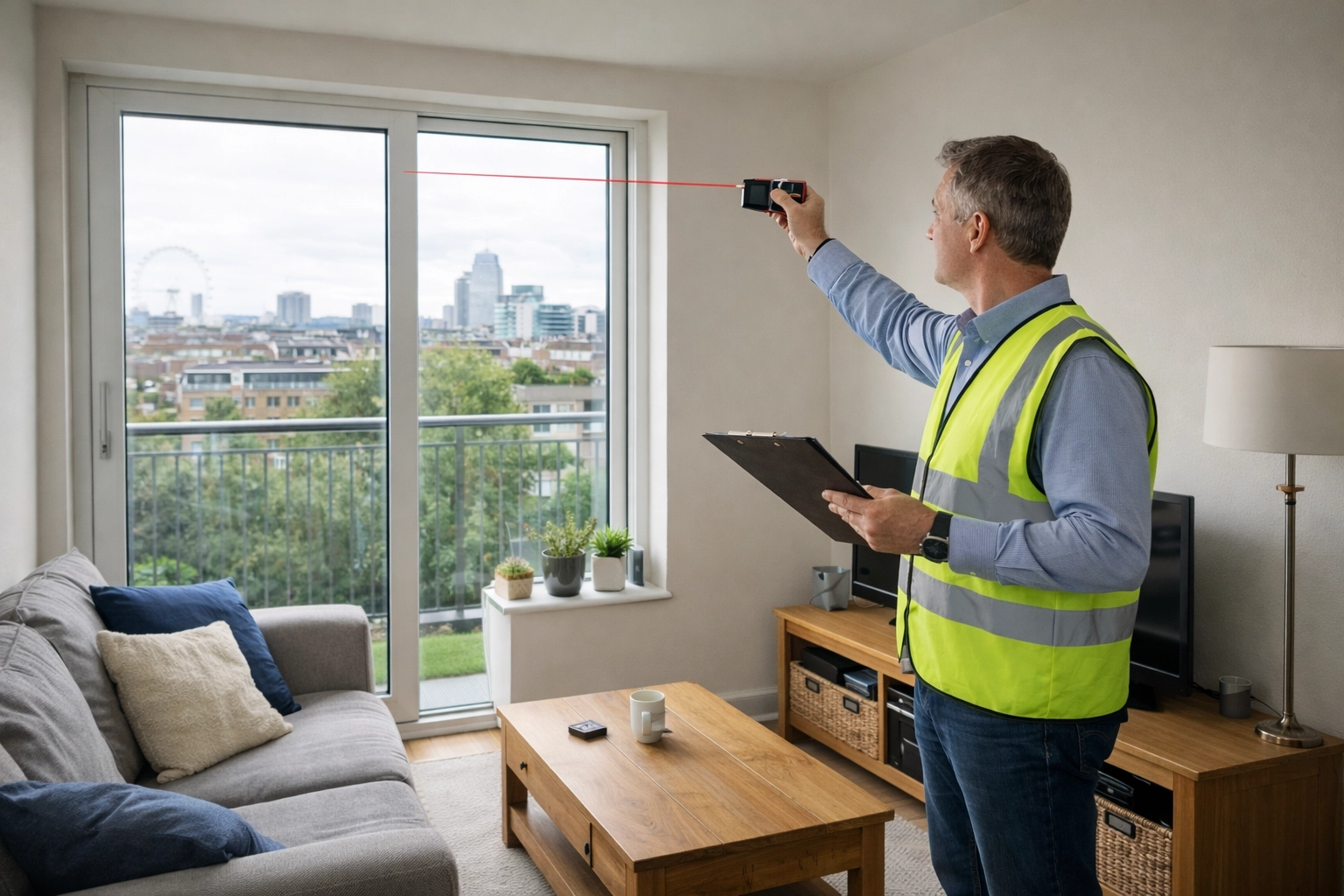
Why housing associations insist on a RICS Registered Valuer (and why you should too)
A staircasing valuation isn’t just a nice-to-have—it’s a formal, transaction-critical report. Housing associations generally require a RICS Registered Valuer because it means the valuation is produced under the RICS Red Book framework, which sets out:
- the valuation basis (typically Market Value)
- the assumptions and investigations made
- reporting standards and auditability
- independence requirements
- record-keeping and professional accountability
In plain English: it’s designed to be consistent, defensible, and not “vibes-based”.
A suitable valuer should:
- be a RICS Registered Valuer (not just “a surveyor”)
- hold appropriate professional indemnity insurance
- understand shared ownership and housing association expectations
- remain independent (no conflicts of interest)
Quick tip (useful in Beckenham and across South East London):
Always check your housing association’s instructions. Some have panel requirements or specific report wording. Getting this wrong can mean delays, re-issues, or in worst cases, a valuation that’s rejected.
What drives the valuation figure (and what doesn’t)
A RICS valuer is essentially answering: “What would this property sell for on the open market on the valuation date?” Then they back it up with evidence.
Key factors include:
Condition and specification
Valuation is not a beauty contest, but it’s not blind either. A well-maintained home with a sensible spec generally performs better than one with obvious defects, dated kitchens, tired bathrooms, or poor presentation.
Comparable evidence (the big one)
Valuers lean on recent sales of genuinely similar properties. In Beckenham, that might mean comparing:
- flat vs flat (not flat vs house)
- same block/road where possible
- similar size, floor level, parking, outdoor space, lease length and service charges (where known)
Location micro-trends
South East London can change street-by-street. Proximity to stations, schools, and high streets can influence value—Beckenham is a classic case of “small differences add up”.
Improvements and alterations
Valuers value the property as it stands. But do note: some housing association rules treat leaseholder improvements differently for shared ownership calculations, so it’s worth clarifying their policy early. (Your valuer can advise on how improvements are reflected in Market Value, but the scheme rules still matter.)
Takeaway: your valuation is a professional judgement anchored to evidence, not a negotiation tactic. The best way to influence it is to make sure the valuer sees accurate information and the property is accessible and presentable.

Timeline and validity: the three-month countdown (no pressure)
Understanding timings is half the battle with staircasing, because the valuation usually has a shelf life.
Valuation turnaround
Many RICS private valuations are turned around within 5–7 working days from instruction (sometimes faster, sometimes slower depending on access and complexity).
Validity period
Housing associations often treat valuations as valid for around three months from the inspection/valuation date. After that, you may need an updated valuation—especially if the market has moved.
Strategic timing (Beckenham edition)
If you’re in a fast-moving area, don’t order the valuation “just to see”. Instruct when you’re realistically ready to proceed with:
- mortgage decisions (if applicable)
- solicitor instruction
- housing association admin timelines
Takeaway: time your valuation so the report is still valid when you actually need to use it.
Disputes, dilemmas, and “that number feels high” energy
Let’s be honest: when a valuation lands higher than expected, it can feel personal. It isn’t. But there are built-in tensions.
Different incentives, same maths
- Leaseholders usually want a lower valuation (cheaper shares).
- Housing associations receive more for the share when the valuation is higher.
That’s exactly why an independent RICS Registered Valuer is critical.
Market timing matters
If the local market is buoyant, staircasing can cost more. If it’s quieter, the opposite may be true. South East London is cyclical, and Beckenham isn’t immune.
What if you disagree with the valuation?
Most housing associations have a process. Common routes include:
- discussing factual issues (e.g., incorrect floor area, wrong comparable assumptions)
- requesting clarification or a report amendment where justified
- pursuing a formal dispute route (varies by housing association; sometimes a second valuation or independent review)
Takeaway: dispute the evidence, not the existence of the valuation. If something is genuinely wrong, a good valuation report can be corrected—calmly and professionally.
What a RICS private valuation covers (and what it very deliberately doesn’t)
A shared ownership valuation is a valuation report—so it does some things brilliantly, and other things not at all.
Usually included:
- Market Value opinion (as at the valuation date)
- key property particulars (type, accommodation, location)
- summary of comparable evidence
- a brief read on local market conditions (relevant in places like Beckenham where prices can be sensitive to micro-location)
Not included (by design):
- a detailed snagging list
- a condition rating system like a HomeBuyer Report
- repair schedules or costed remedial works
- a structural diagnosis of defects
If you’re worried about condition—especially before a big financial leap—consider a separate survey alongside the valuation.
The bit that hits your wallet: staircasing is priced at today’s value
Because staircasing uses current market value, the cost of your extra share is tied to whatever the market is doing when you value—not when you first bought.
A simple example:
- You bought in 2018 when the property was valued at £250,000
- You purchased a 50% share = £125,000
- Today the property is valued at £350,000
- The remaining 50% now costs £175,000
Same percentage. Very different price.
Takeaway: in areas where values have risen (and parts of Beckenham and wider South East London have certainly had their moments), staircasing can cost more than people expect—purely because the market moved.
Stamp Duty considerations (the boring bit that can be expensive)
Staircasing can trigger Stamp Duty Land Tax (SDLT) depending on how your shared ownership purchase was structured and the share you’re buying.
Because thresholds and rules can change (and your individual circumstances matter), treat this as a flag to get proper advice from your solicitor or tax adviser—not a DIY guessing game.
A couple of practical points to discuss with your solicitor:
- whether SDLT is due on the additional premium you’re paying
- whether staircasing to 100% changes the SDLT position compared with smaller increments
- how any previous SDLT election at original purchase affects the calculation
Preparing for your valuation (boujee efficiency, not chaos)
A smooth valuation is mostly about removing friction. Here’s how to make your inspection quick, accurate, and drama-free:
1) Make access easy
Unlock gates, clear the route to meters/boilers, and make sure all rooms are accessible. If there’s a loft hatch, know where the ladder is (if applicable).
2) Gather the useful info (not your whole life admin folder)
Have to hand:
- lease details (if easily available)
- service charge/ground rent info
- evidence of upgrades (receipts/photos can help contextualise, even if they don’t “guarantee” value)
- parking/storage details and any restrictions
3) Present it well
Valuations aren’t staged photoshoots, but light, tidy spaces help a valuer see what they need to see without obstacles.
4) Know your local context
Looking at recent sales can help set expectations—especially in micro-markets like Beckenham, where comparable selection really matters. These local pages are a handy starting point:
Takeaway: a prepared home + prepared paperwork = fewer delays and fewer follow-up questions.
Moving forward with staircasing (calm, informed, and very Beckenham)
A shared ownership staircasing valuation is the hinge on which the whole transaction swings. Get the valuation right—RICS-compliant, evidence-led, properly addressed for the housing association—and the rest of the process tends to behave.
If you’re lining up staircasing and searching for a South East London surveyor, the practical recipe is:
- confirm your housing association’s valuation requirements before booking
- instruct a RICS Registered Valuer for a proper RICS private valuation
- time it so the report stays valid through the legal process
- budget for the premium, fees, and solicitor costs (and check SDLT position early)
Quick recap
- Staircasing uses today’s market value, not your original purchase price.
- The report needs to meet RICS Red Book standards and your housing association’s rules.
- In areas like Beckenham, comparable evidence selection can materially affect outcomes—so professionalism matters.
That’s the grown-up version of “buying more of your home”: still exciting, just with better paperwork.