

What if that charming Victorian terrace on Bellenden Road is actually hiding a five-figure repair bill behind its Farrow & Ball “Railings” front door? It’s no secret that Peckham is the beating heart of South London’s property scene, but falling in love with an SE15 period gem often comes with a side of “what if” anxiety. Whether you are moving across from the SM and CR postcodes or coming from the BR and DA areas, the fear of overpaying in a shifting market or inheriting a structural nightmare is very real.
We understand that you want your investment to be as sound as it is stylish. This guide is here to replace that uncertainty with professional clarity. We will show you how to make a smart move in the current 2026 market and explain exactly which RICS survey will safeguard your future home. From spotting common Victorian defects to demystifying complex leaseholds in converted flats, you are about to get the local expert insight you need to move with absolute confidence and peace of mind.
Key Takeaways
- Navigate the SE15 architectural jungle with a clear understanding of why this creative hub remains South London’s most resilient property market in 2026.
- Learn to identify “Peckham Specials,” including how London Clay foundations and period damp can impact your long-term renovation budget.
- Get expert guidance on choosing between a RICS Level 2 Condition Report for modern flats or a Level 3 Building Survey for Victorian fixer-uppers.
- Move with absolute confidence by using professional, RICS-regulated insights to demystify complex leaseholds and structural liabilities.
Why Peckham is Still South London’s Coolest (and Trickiest) Property Spot
Peckham isn’t just a place to live; it’s a lifestyle choice. You’ve likely spent weekends soaking up the creative energy at the Bussey Building or enjoying the leafy, open stretches of Peckham Rye. This unique blend of grit and greenery is exactly why the SE15 vibe remains so addictive. However, as your knowledgeable friend in the industry, I have to give you a reality check. A trendy postcode and a great local sourdough bakery don’t exempt a property from having a damp basement or a leaking roof. Understanding the History of Peckham helps explain why the housing stock is such a mixed bag of Victorian gems and mid-century experiments. We cover this entire landscape, from the heart of SE15 and SE22 to the surrounding BR and CR postcodes.
To better understand the local landscape and its unique character, watch this helpful video:
The Bellenden Road vs. Rye Lane Divide
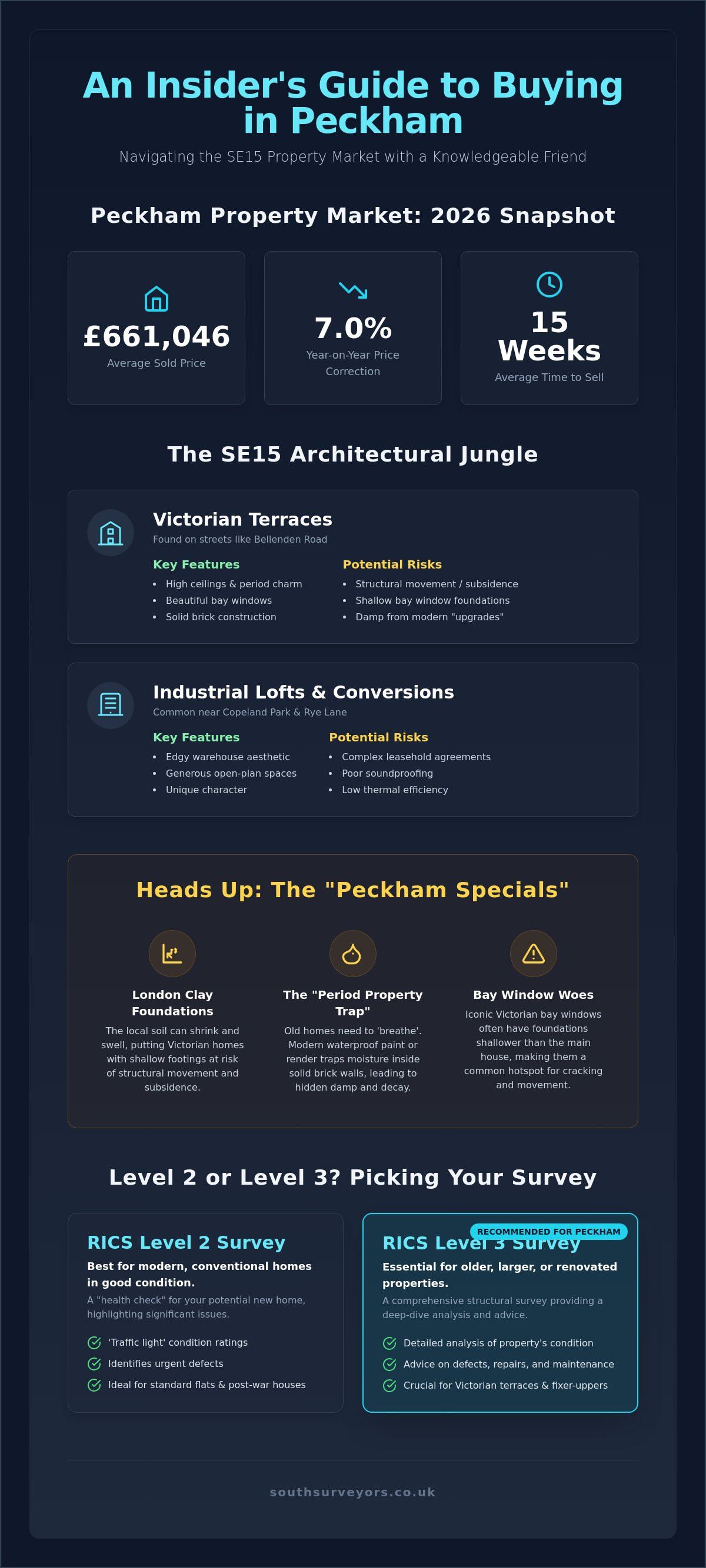
The architectural soul of Peckham changes block by block. On Bellenden Road, you’ll find grand Victorian terraces with beautiful bay windows that are high on charm but often prone to structural movement. Head towards Rye Lane, and the scene shifts to edgy industrial conversions near Copeland Park. These different styles require different eyes. A 150-year-old brick house needs a deep dive into its foundations, while a warehouse loft might have complex leasehold issues or hidden industrial “quirks.” We bring professional substance to these hipster haunts, ensuring the survey matches the specific risks of the building style you’ve fallen for.
Peckham’s 2026 Property Outlook
The property market here has shown remarkable resilience. While London has seen some fluctuations, SE15 saw a 7.0% year-on-year price correction as of July 2026. With the average sold price currently sitting at £661,046, buyers are finding slightly better value than in the 2022 peak. But don’t let the lower entry price fool you into skipping due diligence. Empowered decision-making is essential when the average sale time is still a brisk 15 weeks. Transparency from your surveyor is your best weapon. We give you the hard facts so you can negotiate with confidence or walk away from a potential money pit before it’s too late.
Victorian Terraces to Modern Lofts: Navigating the SE15 Architectural Jungle
Peckham’s streets are a living museum of London’s building history. You might be eyeing a three-storey Victorian terrace near Bellenden Road or a minimalist industrial loft by Copeland Park. While these buildings define the area’s character, they each come with a unique set of structural secrets. For instance, those iconic Victorian bay windows often suffer from foundation movement because they were built with shallower footings than the main house. If you are serious about a period property, a level 3 building survey is non-negotiable to ensure the brickwork is as solid as it looks.
Savvy buyers in the SE postcode are increasingly looking at ex-council properties for better square footage and more generous floor plans. These post-war builds are often structurally robust, though they may lack the “period charm” some crave. On the other hand, industrial conversions offer that sought-after warehouse aesthetic but can present challenges with soundproofing or thermal efficiency. Before you sign on the dotted line, consulting the official UK government home buying guide can provide a helpful roadmap for the legal and logistical steps ahead. It is a great way to ground yourself before diving into the fast-paced local market.
The Period Property Trap
Victorian homes in Peckham were designed to “breathe” through porous lime mortar and solid brick walls. Problems arise when a previous owner slaps on modern waterproof render or non-breathable masonry paint. This traps moisture within the walls, leading to damp and timber decay that can stay hidden behind fresh plaster for years. Our role as RICS surveyors is to spot these “DIY disasters” and poorly executed modernisations. We help you understand if a property’s quirks are harmless character or expensive liabilities that require immediate attention.
Leasehold vs. Freehold in Peckham
Buying a flat conversion or a maisonette introduces the complexity of shared responsibilities. It’s vital to know who owns the roof and who pays when the communal pipes burst. You can read more about Freehold vs Leasehold in a Peckham Flat to get a head start on the legalities. If you’re using shared ownership or Help to Buy, a RICS valuation is often a mandatory requirement to ensure the price reflects the true market value. If you’re feeling overwhelmed by the architectural jargon, a quick chat with our local experts can provide the clarity you need to move forward with confidence.
The “Peckham Specials”: Common Property Defects to Watch Out For
Every neighbourhood has its quirks, but the “Peckham Specials” are a unique set of structural headaches that often hide behind those beautifully restored Victorian facades. While you are busy imagining where your mid-century sideboard will go, the building might be dealing with the “wobbles.” This is largely down to the London Clay that Peckham sits on. This soil type is notoriously temperamental; it shrinks in dry summers and swells in wet winters, causing foundations to shift. Understanding these local nuances is the first step in spotting property defects in South London homes before they become your financial burden.
Roofing is another area where a quick glance from the pavement simply won’t cut it. Many period properties in the SE15 area still have their original slate roofs, which are now reaching the end of their natural lifespan. Slates can slip, and the lead flashing around chimneys often perishes, leading to slow-burning leaks that rot roof timbers long before you see a drip on the ceiling. Because these houses are tall, you need a professional eye to check the “hidden” valleys and flat roof sections that estate agent photos conveniently skip.
Subsidence: When Cracks Become Chasms
Don’t panic at every hairline crack in the plaster; most old houses have “settled” over the last century. However, you should be wary of diagonal cracks that are wider than a 5p coin, especially if they appear around window frames or door openings. Peckham is famous for its mature, leafy streets, but those thirsty trees can suck the moisture out of the clay soil, causing foundations to drop. If you spot these tell-tale signs, a Level 3 survey is non-negotiable to determine if the movement is historic or active and progressive.
The Damp Truth About Basement Flats
Basement flats in converted Victorian houses are incredibly popular, but they are the natural frontline for damp issues. We often see properties where fresh “staging” paint is used to hide salt staining or bubbling plaster. Many owners rely on “tanking” (a waterproof seal), but if this isn’t installed perfectly, it can actually trap moisture against the brickwork and cause more damage. Our surveyors use professional moisture meters to see through the decor, checking if the Victorian drainage systems in the SE15 area are still doing their job or if they’re contributing to timber decay beneath your floorboards.
Level 2 or Level 3? Picking the Right Survey for Your Peckham Purchase
Choosing a survey in Peckham isn’t just about ticking a box for your mortgage lender. It’s about matching the level of detail to the complexity of the building. A RICS Level 2 (Condition Report) is usually ideal for those sleek, modern apartments popping up near the station or well-maintained 1990s builds. It gives you a clear, colour-coded overview of the property’s condition without a deep structural dive. However, for the majority of the SE15 housing stock, this might not be enough. You can see how we apply this logic in our comparison of a Level 2 vs Level 3 Survey for a Beckenham Property. Opting for the “cheaper” report on a 120-year-old house is a gamble. It might save you a little upfront, but it could cost you thousands if a major structural defect remains hidden.
A RICS Level 3 (Building Survey) is the gold standard for anything older, larger, or more complex. It provides a thorough analysis of the property’s structure and fabric, which is essential when dealing with Victorian brickwork. If you choose the wrong level of service, you risk missing the “Peckham Specials” we discussed earlier, like progressive subsidence or perished roof timbers. Making an empowered decision now ensures you aren’t hit with a massive repair bill just weeks after moving in.
When to Go Level 3 in SE15
If your potential new home is over 50 years old, which covers most of the streets around Peckham Rye, you should definitely opt for a Level 3 survey. This is also essential if you are planning to add value with a loft conversion or a trendy “side return” extension. These structural changes put extra pressure on old foundations. Here’s a tip from a “knowledgeable friend”: if a property looks like a total bargain for this postcode, there’s almost certainly a structural reason why. A Level 3 survey will find it before you commit.
The Party Wall Headache
Peckham’s terraced nature means you’ll be living cheek-by-jowl with your neighbours. This makes the Party Wall Act a significant factor if you’re planning any renovations that affect a shared wall. You can read more in The Party Wall Act: A Friendly Guide for South London Homeowners to understand your legal obligations. Staying on good terms with your new SE15 community starts with being a responsible and transparent renovator. If you’re unsure which report fits your specific property, contact our local experts today for a clear, professional recommendation.
South Surveyors: Your Local Experts for a Stress-Free Peckham Move
Buying a property in Peckham is a bold, exciting move. You are investing in one of London’s most resilient and creative hubs, but you don’t want that excitement to be overshadowed by the fear of a structural lemon. This is where we step in. We aren’t corporate robots churning out generic reports; we are your local experts who happen to be obsessed with RICS standards and building regulations. Our RICS-regulated status is our central pillar of trust. It is the gold standard that guarantees you are getting a bespoke service designed to protect your financial future, not just a tick-box exercise.
We like to call our approach “Hipster Flair with Professional Substance.” It means we appreciate the industrial aesthetic of a warehouse conversion near Copeland Park just as much as you do, but we also know exactly how to spot the failing tanking in its basement. We provide the clarity and confidence you need for these high-stakes SE15 moves, stripping away the technical jargon to give you the hard facts. Our goal is to empower your decision-making, ensuring you move into your new home with your eyes wide open and your investment secure.
Local Knowledge, Professional Standards
Our team lives and breathes the SE, BR, and DA postcodes. Whether you are eyeing a grand Victorian terrace in East Dulwich, a garden flat in Nunhead, or a modern build in the heart of Peckham, we bring a meticulous and dependable eye to the table. When you are spending hundreds of thousands of pounds, you deserve a surveyor who is as diligent as they are approachable. If our report uncovers a “Peckham Special” defect, it becomes your most powerful tool for price negotiation. Having a professional, evidence-based document allows you to go back to the seller with authority, potentially saving you thousands on the final purchase price.
Let’s Get You Moving
Moving house is inherently stressful, but it doesn’t have to be a gamble. We are here to alleviate that uncertainty and provide you with a clear roadmap for your investment. The logical next step isn’t to cross your fingers and hope for the best; it’s to book a consultation with a real human who knows the local streets as well as they know the RICS guidelines. We offer bespoke quotes tailored to your specific property type, ensuring you get the exact level of detail you need. Let’s make sure your South London story starts on solid ground. Book your Peckham survey with South Surveyors today and move with absolute peace of mind.
Secure Your Future in London’s Most Dynamic Postcode
Peckham is more than just a collection of trendy bars and leafy parks; it’s a complex architectural landscape that demands respect and a professional eye. Whether you’ve fallen for a Bellenden Road terrace or a sleek loft conversion, you now have the tools to navigate the SE15 market with confidence. Remember that the “wobbles” of London Clay and the hidden decay of period homes are manageable risks when you have the right RICS-backed evidence in your hand. Choosing the correct survey level isn’t just a hurdle to clear; it’s your best strategy for long-term financial security.
We’ve helped hundreds of buyers across South London make empowered decisions through our meticulous, RICS-regulated reports. With over 100 five-star reviews from local homeowners, we pride ourselves on providing the clarity you need without the corporate robot jargon. Don’t leave your investment to chance. You can get a bespoke quote for your Peckham property survey today and benefit from our deep local knowledge. Your South London story is just beginning, and we are here to make sure it starts with absolute peace of mind.
Frequently Asked Questions
Is Peckham a good place to invest in property in 2026?
Peckham remains a standout choice for investors and homeowners alike because of its enduring cultural appeal and central location. As of July 2026, the market has seen a 7.0% year-on-year price correction, making entry points more accessible than during the 2022 peak. While wider London trends fluctuate, the demand for homes near Peckham Rye and the creative hubs around Rye Lane continues to underpin local property values.
How much does a RICS Level 3 building survey cost in Peckham?
The cost of a RICS Level 3 building survey depends entirely on the size, age, and complexity of the property you are buying. Because SE15 is packed with unique Victorian terraces and industrial conversions, a one-size-fits-all price doesn’t exist. Generally, a more detailed Level 3 report is a larger investment than a basic Condition Report, reflecting the expert time required to inspect those hidden structural corners.
Do I really need a full survey for a Peckham flat conversion?
Yes, because when you buy a flat conversion, you are essentially buying a slice of a much older, larger building. If the communal roof is leaking or the shared foundations are shifting on London Clay, you will likely be liable for a portion of the repair costs. A full survey ensures you aren’t inheriting a share of a structural nightmare that fresh paint in the hallway is hiding.
How long does a building survey take in South London?
You can typically expect the entire process to take between one and two weeks from booking to receiving your final report. The physical inspection of the property usually takes between three and six hours, depending on the building’s condition. Our surveyors then spend several days meticulously analysing the findings and drafting a bespoke, jargon-free document that gives you total clarity on your potential purchase.
What are the most common structural issues in SE15 houses?
Subsidence is the most frequent structural headache in Peckham, primarily caused by the temperamental London Clay soil and thirsty mature trees. We also regularly find “breathability” issues where modern masonry paint has been applied to Victorian brickwork, leading to trapped moisture. Perished roof timbers and original slate roofs that have reached the end of their natural lifespan are also common findings in our local inspections.
Can a surveyor help me negotiate a lower price on a Peckham property?
Absolutely, your survey report is your most powerful negotiation tool. If we identify five-figure repair bills for roofing or damp proofing, you can take that evidence back to the seller or estate agent. Most buyers use our findings to either request a price reduction that reflects the cost of repairs or ask the seller to fix the issues before the exchange of contracts.
What is the difference between a mortgage valuation and a RICS survey?
A mortgage valuation is a brief check for the bank’s benefit to ensure the property is worth the loan; it is not a detailed inspection of the building’s health. A RICS survey is a comprehensive report for your benefit, designed to find defects and structural risks. Relying solely on a valuation is a common mistake that leaves buyers exposed to expensive, hidden repair costs after they move in.
Do I need a party wall agreement for my Peckham renovation?
You will likely need a party wall agreement if your renovation involves structural work to a shared wall or digging foundations near a neighbour’s property. This is almost universal for terraced houses in South East London. Getting this legal paperwork in order early is essential for staying on good terms with your neighbours and avoiding costly legal delays during your build. It’s always best to check with a professional before you start.