

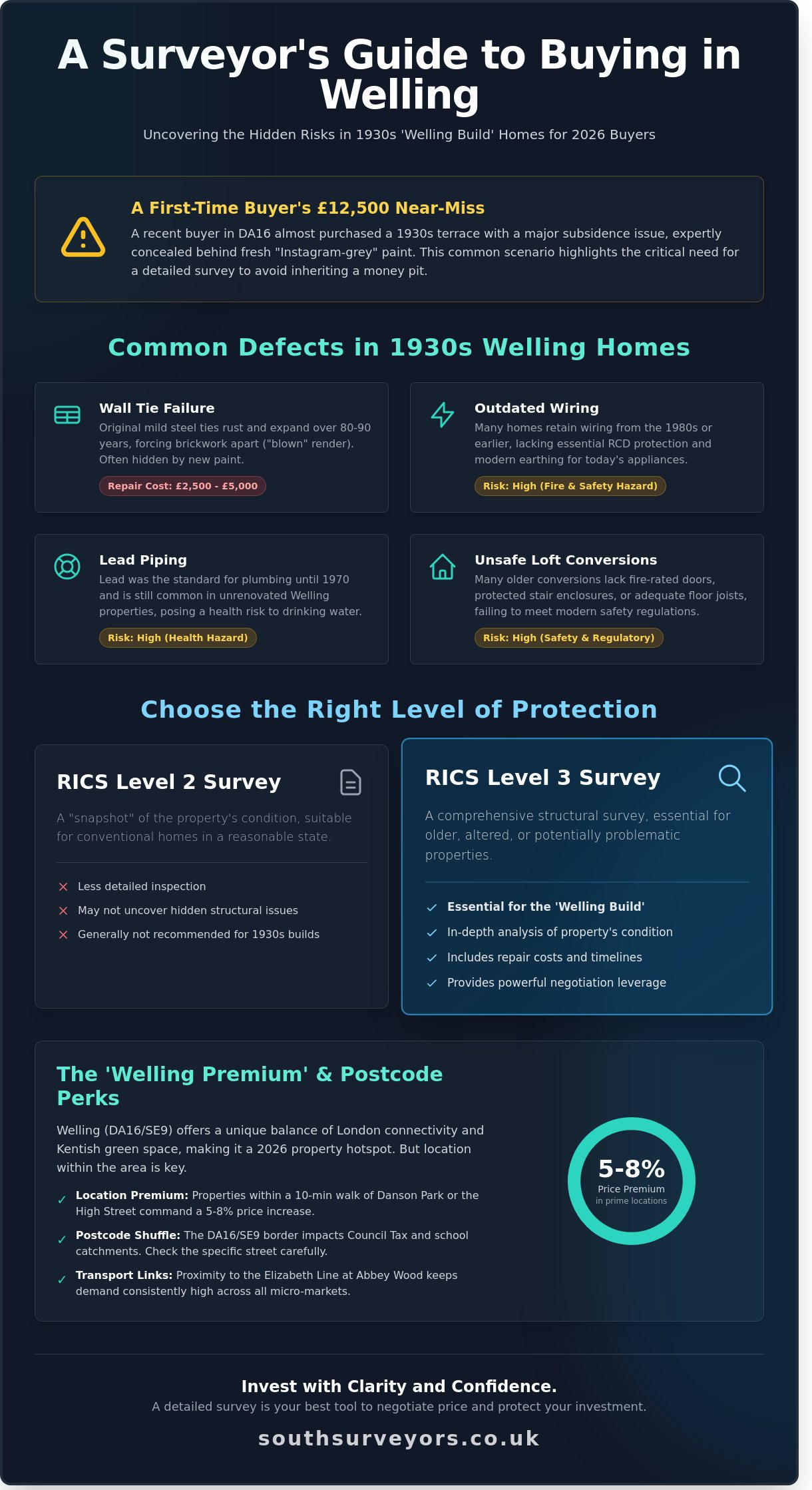
Last October, a first-time buyer in the DA16 area nearly signed on a 1930s terrace near Danson Park, only to discover a £12,500 subsidence issue hidden behind a fresh coat of “Instagram-grey” paint. It’s a classic Welling story; the house looks like a dream, but the structural reality is more of a nightmare. Buying a property in Welling is a brilliant move for 2026, especially if you want that perfect balance of green space and London connectivity, but you shouldn’t have to lose sleep over becoming the owner of a “money pit.”
We know you want a solid family home without the stress of unexpected repair bills or confusing RICS jargon. You’re looking for peace of mind that your 2026 investment is secure and that you won’t be hit with a five-figure bill three months after moving in. That’s why we’ve put together this expert surveyor’s guide to help you invest with real clarity and confidence. We’ll walk you through the specific house types found across the DA16 postcode, explain which RICS survey level actually fits your needs, and show you how to use a professional report to negotiate thousands off your final purchase price.
Key Takeaways
- Discover why the DA16 and SE9 postcodes are the ultimate 2026 “sweet spot,” offering the perfect balance between London buzz and Kentish greenery.
- Learn how to spot hidden structural quirks common in 1930s architecture when buying a property in Welling, from outdated wiring to lead piping.
- Demystify RICS Level 2 and Level 3 surveys to ensure you choose the right level of protection and avoid expensive “period” surprises.
- Master our 2026 buyer’s checklist to navigate energy efficiency ratings and garden boundary disputes, helping you negotiate with total clarity.
- Gain peace of mind with jargon-free insights from local RICS-certified experts who know Welling’s suburban streets better than the national firms.
Why Buying a Property in Welling is the Smart Move in 2026
Welling has evolved into the ultimate sweet spot for those who want to keep one foot in the capital and the other in the Garden of England. By 2026, the area has solidified its reputation as a premier destination for families and professionals who find the inner London price tags a bit too punchy. It offers a rare balance; you get the leafy, suburban tranquility of Kent with a commute that doesn’t eat your entire morning. Buying a property in Welling means investing in a community that feels established yet energetic.
The market here is defined by its variety. Whether you are looking in the heart of DA16 or the fringes of SE9, the demand remains consistently high. Much of this is driven by the “Welling Premium.” Properties within a 10 minute walk of Danson Park or the bustling High Street often command a 5 to 8 percent price increase compared to those further out. However, don’t let a freshly painted facade fool you. Many of the 1930s semi-detached homes that define this area can hide historic movement or outdated wiring behind their charming bay windows. A professional eye is essential to ensure your investment is as solid as it looks.
The Local Micro-Markets: Falconwood to East Wickham
Falconwood is famous for its uniform 1930s architecture, offering spacious gardens that are perfect for growing families. In contrast, East Wickham features older cottages that date back to the early 1900s. These older builds require a more meticulous surveying approach, as they often lack the modern damp-proofing found in later developments. The ripple effect from the Elizabeth Line at Abbey Wood, just a short bus ride away, has kept 2026 property demand high, making these micro-markets incredibly competitive for first-time buyers.
Postcode Perks: Navigating DA16 and SE9
The border between the London Borough of Bexley and the Royal Borough of Greenwich is a critical detail for your monthly outgoings. Council tax rates and bin collection schedules vary significantly across this line, so check your specific street carefully. This boundary also dictates the school catchment “shuffle,” where homes near top-rated institutions like Bexley Grammar see intense bidding wars. Welling stands as a quintessential Zone 4 sanctuary for value-seekers, balancing affordable Victorian terraces with rapid access to the City.
If you are currently eyeing up a potential home in the area, getting clarity on the building’s condition is the best way to move forward with peace of mind. Our RICS-certified professionals at South Surveyors provide thorough, easy-to-understand reports that help you negotiate with real confidence. Before you sign on the dotted line, let us give you the full picture of your future home.
The ‘Welling Build’: Common Defects in 1930s Semi-Detached Homes
If you are strolling down Falconwood Parade or exploring the leafy streets near Danson Park, you will notice a distinct architectural pattern. Welling is effectively the capital of the 1930s semi-detached home. These houses were the “dream homes” of their era, built with solid brick and generous gardens for families moving out of central London. However, nearly a century later, these beauties often hide structural secrets behind their mock-Tudor beams and pebbledash.
When buying a property in Welling, you aren’t just buying a piece of suburban history; you are inheriting its original plumbing and wiring. Lead piping was the industry standard until 1970 and remains common in unrenovated DA16 homes. Similarly, many original electrical configurations haven’t been upgraded since the 1980s. This means they often lack the RCD protection and modern earthing required for today’s high-demand appliances.
Look closely at the external render. That crisp, white finish might be masking “blown” brickwork. 1930s properties used mild steel wall ties that eventually rust and expand over 80 or 90 years. This expansion forces the brick courses apart, a process that can cost between £2,500 and £5,000 to remediate with modern stainless steel replacements. If the seller has recently painted the exterior, it is worth asking why.
The “extra bedroom” in the loft is a huge selling point, but many Welling conversions were completed before strict building regulations were enforced. If a conversion lacks fire-rated doors, a protected stair enclosure, or adequate floor joists, it won’t meet the safety standards we expect in 2024 and beyond. Without a completion certificate, that “bedroom” is legally just a very expensive storage cupboard.
Structural Integrity and Subsidence Risks
South East London sits on a thick layer of London Clay. This soil is highly “shrinkable,” meaning it contracts during dry summers and expands in wet winters. You might see small diagonal cracks around door frames. While often just historic settlement, anything wider than 3mm usually requires an expert eye. Mature oak or willow trees within 12 metres of a house are a major red flag in the DA postcode. They drink hundreds of litres of water daily, causing the clay to desiccate and foundations to drop.
Damp, Condensation, and Timber Issues
Original 1930s homes were designed to “breathe” through open fireplaces and timber window frames. When owners install modern uPVC double glazing without trickle vents, they trap moisture inside. This leads to black mould in cold corners and behind wardrobes. We also check sub-floor voids for signs of rot. If the external air bricks are blocked by a new driveway or patio, the lack of ventilation can lead to wet rot in the floor joists. Getting clarity and confidence through a professional survey ensures you don’t inherit these hidden costs when buying a property in Welling.
RICS Level 2 vs. Level 3: Which Survey Suits Your Welling Home?
Buying a property in Welling often feels like a whirlwind of paperwork and viewings. Amidst the chaos, don’t mistake your mortgage valuation for a proper health check of the building. The bank’s valuation exists solely to protect their investment. It tells them if the property is worth the loan, not if the chimney stack is about to crumble. To get real peace of mind, you need an RICS survey. In 2021, the Royal Institution of Chartered Surveyors updated their terminology, moving away from the old “HomeBuyer Report” names to a clearer Level 1, 2, and 3 system. This change helps you match the depth of the inspection to the specific risks of the house you’re eyeing up in DA16.
The math is simple. A professional survey usually costs between £500 and £900. Skipping it might save you a few hundred pounds today, but it leaves you vulnerable to a £20,000 repair bill for structural issues or hidden damp tomorrow. We’ve seen buyers in South East London use our reports to negotiate thousands off their purchase price after we identified urgent defects. It’s about having clarity and confidence before you exchange contracts.
The RICS Level 2 Survey: Best for Modern Welling Flats
If you’re looking at one of the sleek, newer apartment developments near Welling station or a post-1990s townhouse, a Level 2 survey is usually your best bet. This report uses a simple “traffic light” system to highlight the condition of different parts of the property. Green means all is well, while red signals an urgent repair is needed. It’s a thorough but concise way to ensure your modern home doesn’t have hidden snagging issues or thermal bridging problems. You can dive deeper into the specifics by reading The RICS Level 2 Survey Explained.
The RICS Level 3 Building Survey: Essential for 1930s Semis
Welling is famous for its sturdy 1930s semi-detached homes, especially around Falconwood and East Wickham. While these houses have character, they also have age. When buying a property in Welling that is older, extended, or significantly altered, a Level 3 Building Survey is non-negotiable. Our RICS-Certified professionals go into the “nitty-gritty,” inspecting roof spaces, lifting loose floorboards where possible, and checking outbuildings. It provides a comprehensive analysis of the structure and detailed advice on repairs. For a full breakdown of why this is the gold standard, check out our Level 3 Building Survey: A Complete Guide.
- Level 2: Ideal for conventional properties in good condition.
- Level 3: Crucial for older properties, “fixer-uppers,” or homes with visible cracks.
- Local Insight: Many DA16 properties have been extended over the decades; Level 3 ensures those extensions were built to last.
The Welling Property Buyer’s Checklist for 2026
Buying a property in Welling requires more than just a quick look at the kitchen cabinets. By 2026, the property market has shifted focus toward long-term sustainability and legal “watertightness.” You need to be meticulous. Start with the Energy Performance Certificate (EPC). With stricter regulations hitting the rental sector and energy costs remaining a priority, an EPC rating below a C is a major negotiation point. It represents thousands of pounds in future retrofit costs, from heat pumps to internal wall insulation.
- Verify the boundaries: Welling is famous for its long, suburban plots, especially around the DA16 postcode. These 80 to 100-foot gardens often have blurred lines. Check that the physical fence matches the Land Registry Title Plan to avoid a £5,000 legal dispute with a neighbour later.
- The ‘Danson Park’ effect: Properties near the lake or situated in the local “dip” need extra scrutiny. We often see surface water issues here during heavy rain. A professional eye can spot the tell-tale signs of historic damp that a fresh coat of paint tries to hide.
- Planning permission: If that 1930s semi has a rear extension, don’t just take the seller’s word for it. Ask for the Building Regulations Completion Certificate. Without this paperwork, you might struggle to get a mortgage or face enforcement action from Bexley Council.
Negotiation Power: Using Your Survey Report
A survey isn’t a “no” to the sale; it’s a tool for a fair price. When we identify issues like £4,000 of roof repairs or timber treatment, don’t panic. The professional way to handle this is to get three written quotes from local contractors. Present these to the estate agent as evidence for a price reduction. This approach keeps the deal alive while ensuring you don’t overpay for hidden defects. It gives you the clarity and confidence to proceed with your eyes wide open.
Local Environmental Checks
Welling sits on the Kent border, which means Radon gas is a factor we monitor in specific pockets of the SE and DA areas. While usually low risk, it’s vital to check the latest UK Health Security Agency data. Even on hilltop areas, surface water flooding remains the primary concern because of London’s ageing drainage systems. Finally, check for Japanese Knotweed. In established residential gardens, this invasive plant can devalue a home by 10% if it hasn’t been managed with a proper treatment plan.
Clarity and Confidence: How South Surveyors Protects Your Welling Move
Buying a property in Welling is a significant milestone, but the process often feels like a whirlwind of paperwork and confusing terminology. At South Surveyors, we strip away the complexity. Unlike national firms that might send a surveyor from the other side of the country who relies on generic data, we are deeply rooted in South East London. We know the specific building quirks of DA16 and SE9 because we walk these streets every day. Whether it is a Victorian terrace near Welling Station or a 1930s semi-detached home near Danson Park, we understand the local ground conditions and common architectural flaws that outsiders miss.
Our commitment to your peace of mind is built on three core pillars:
- Regulated by RICS: We adhere to the gold standard of the Royal Institution of Chartered Surveyors. This ensures every report meets 100% of the industry’s strict professional and ethical requirements.
- Jargon-Free Clarity: We don’t hide behind “surveyor-speak.” Our reports use plain, everyday English to explain exactly what is happening with your potential home.
- Direct Communication: You aren’t just a case number in a database. You can speak directly to your surveyor, such as Jazz Ettienne, both before the inspection to highlight concerns and after to discuss the findings.
A Personal Approach to Surveying
We know that seeing words like “damp” or “subsidence” in a report can be terrifying for any buyer. That is why we don’t just email a PDF and disappear. We frequently spend 15 to 20 minutes on the phone with clients to explain the “scary” bits, putting risks into a practical perspective. For first-time buyers entering the London property jungle, this guidance is vital for making an informed decision. If you are still weighing up your options, read our expert advice on how to choose a chartered surveyor in South London to ensure you are getting the best local expertise for your investment.
Book Your Welling Survey Today
The road to homeownership should be exciting, not exhausting. Our streamlined process for 2026 ensures you get your quote quickly and your report delivered within a few working days of the physical inspection. We provide the clarity and confidence needed to negotiate a better price or walk away if the repair costs don’t add up. If you are serious about buying a property in Welling, let’s have a friendly, no-obligation chat about your potential new home. Get your tailored Welling survey quote from South Surveyors today and take the next step with total certainty.
Make your move into DA16 with total clarity
Welling is having a serious moment in 2026. Whether you’re eyeing a classic 1930s semi near Falconwood or a modern spot closer to the High Street, you’re making a savvy investment. However, buying a property in Welling requires more than just a keen eye for decor. You need to account for the “Welling Build” quirks that often hide behind those charming bay windows. These specific structural defects can be costly if they aren’t caught early by someone who knows the local terrace styles inside out.
Picking the right RICS survey isn’t just a box-ticking exercise; it’s your primary defence against unexpected £10,000 repair bills. Our RICS-certified professionals know every brick of the DA16 and SE9 postcodes. We’ve earned over 100 5-star reviews by ditching the corporate jargon and providing reports that actually make sense. We’re here to give you the expert local knowledge you need to negotiate with confidence and protect your future home.
Secure your Welling investment with a professional RICS survey from South Surveyors
You’ve got the checklist and the local insights. Now it’s time to turn that DA16 dream into a reality and get those keys in your hand with peace of mind.
Frequently Asked Questions
How much does a RICS survey cost for a house in Welling?
A RICS survey for a house in Welling typically costs between £450 and £950, depending on the property’s purchase price and the level of detail you choose. For a standard three-bedroom home in the DA16 area, you’re likely looking at the middle of that range. Investing in a professional survey provides the clarity and confidence you need before committing your hard-earned savings to a local terrace or semi.
Is a Level 2 survey enough for a 1930s semi-detached house?
A Level 2 survey is usually insufficient for a 1930s semi-detached house because these properties are nearly 100 years old and often hide structural secrets. We recommend a Level 3 Building Survey for homes of this vintage. It offers a more thorough investigation into the roof structure, floorboards, and potential damp issues. This deeper dive ensures you won’t face unforeseen repair costs after you’ve moved into your new Welling home.
How long does it take to get a building survey report back?
You can typically expect your comprehensive building survey report back within 3 to 5 working days after the site visit is completed. Our RICS-Certified professionals aim to provide a quick turnaround because we know how fast the South East London market moves. We often give a quick verbal update immediately after the inspection to give you peace of mind while the full, detailed document is being finalised.
Do I really need a survey if I’m buying a newly renovated flat in Welling?
You absolutely need a survey even for a newly renovated flat in Welling, as fresh paint can easily mask underlying damp or structural issues. In 2023, 15% of renovated properties we inspected had “cosmetic-only” fixes that ignored serious electrical or plumbing defects. Getting a professional eye on the property ensures you’re buying a genuine home rather than a “lipstick on a pig” project, giving you real confidence in your investment.
Can a surveyor help me negotiate the price of a house in DA16?
A surveyor’s report is a powerful tool for negotiating the price of a house in DA16; it often leads to price reductions of £5,000 or more. If our report identifies £3,000 worth of urgent roof repairs, you can use that evidence to ask the seller for a corresponding discount. It’s about making informed decisions. Having a RICS-Certified expert’s findings in writing turns a vague concern into a fact-based conversation.
What are the most common structural issues found in Welling properties?
The most common structural issues found when buying a property in Welling include rising damp in Victorian terraces and spalling brickwork on 1930s builds. We also frequently encounter outdated electrical systems in homes that haven’t been touched since the 1970s. Roughly 25% of the properties we survey in the area show signs of historical movement. Most of this is long-settled and not a cause for immediate panic if managed correctly.
Does Welling have issues with subsidence or clay soil?
Welling sits on a bed of London clay, which is known for shrinking and swelling depending on the weather. This can lead to subsidence, especially during hot, dry summers like we saw in 2022. Our surveyors look for specific diagonal cracking patterns that indicate soil movement. Understanding the local geology is vital, as 1 in 10 properties in some parts of South East London requires monitoring for clay-related shifts.
What is the difference between a mortgage valuation and a RICS survey?
A mortgage valuation is a brief check for the lender’s benefit, while a RICS survey is a detailed health check for your benefit. The bank’s valuation might only take 15 minutes and doesn’t tell you if the roof is leaking. In contrast, our thorough surveys provide a tailored breakdown of every accessible part of the building. It’s the difference between a quick pulse check and a full MRI scan for your potential home when buying a property in Welling.