

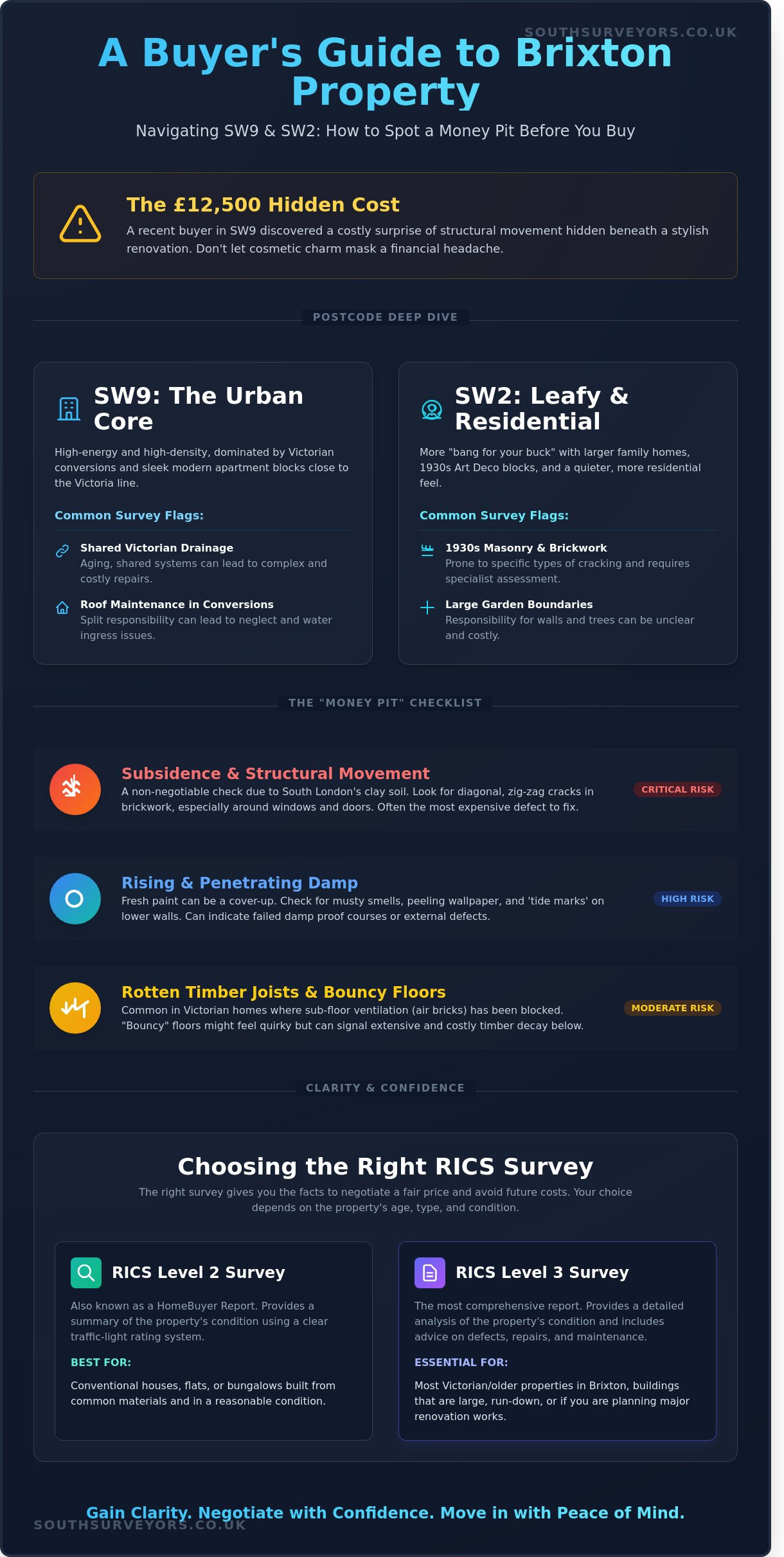
Last Tuesday, a hopeful buyer in SW9 thought they had secured a bargain on a Victorian terrace, only to discover £12,500 of structural movement hidden beneath a stylish renovation. Buying a property brixton is an exhilarating ride, but the pace of the market means it’s easy to overlook the cracks, both literal and metaphorical. You want the vibrant lifestyle of Atlantic Road and the greenery of Brockwell Park, not a mortgage-sized bill for damp proofing or subsidence repairs.
We know the stress of the London bidding war is real, and the pressure to make a split-second decision can be overwhelming. This guide will provide you with the professional surveying insights and local SE24 knowledge you need to avoid the dreaded money pits. You will learn how to distinguish between cosmetic charm and structural integrity. We’re going to give you the clarity to negotiate a fair price based on facts, ensuring you move into your new home with total peace of mind and a solid foundation.
Key Takeaways
- Navigate the distinct vibes of SW9 and SW2 to find the perfect balance between Brixton’s vibrant cultural heart and its leafier residential stretches.
- Learn how to identify common structural red flags in Victorian terraces and modern flats when buying a property in Brixton to avoid costly surprises.
- Master the “Surveyor’s Squint” and discover why South London’s clay soil makes checking for subsidence a non-negotiable step in your viewing process.
- Gain the clarity and confidence to choose between a Level 2 and Level 3 RICS survey, ensuring you have the right expert insights to negotiate like a pro.
Why Brixton is Still the Place to Be (and the Risks No One Mentions)
Brixton isn’t just a postcode; it’s a South London institution that refuses to stand still. Whether you’re drawn by the scent of wood-fired pizza in Brixton Village or the 125 acres of rolling greenery at Brockwell Park, the magnet pull of the area is undeniable. For anyone considering buying a property brixton, the energy is infectious, but that same excitement can sometimes blind buyers to the structural realities of Victorian terraces and aging conversions. Understanding the History of Brixton reveals a landscape that has shifted from 19th-century luxury to urban grit and back to high-demand gentrification, leaving behind a complex architectural legacy.
To better understand the investment potential and the rapid pace of the local market, watch this helpful video:
The Brixton Vibe: Culture, Coffee, and Commutes
High-speed transport is the secret weapon here. The Victoria Line is the undisputed king of the Underground, whisking commuters to Oxford Circus in just 12 minutes. This efficiency, paired with cultural landmarks like the Ritzy Cinema and Electric Avenue, has sparked a massive influx of buyers from the SE, BR, and CR postcodes. At South Surveyors, we act as your knowledgeable friend on the ground. We know these streets because we’ve surveyed hundreds of them, ensuring you have the peace of mind to enjoy your new local coffee haunt without worrying about what’s happening behind the plasterboard.
Postcode Politics: SW2 vs. SW9
Choosing between SW9 and SW2 is about more than just your proximity to the tube. SW9 is the high-energy urban core, largely dominated by dense Victorian conversions and sleek modern apartment blocks. If you move further south into SW2, you often find more “bang for your buck,” featuring larger family homes and iconic Art Deco blocks like those found along Christchurch Road. Because the building styles vary so significantly between these postcodes, your choice of location should dictate the type of survey you commission.
- SW9: High-density, urban, and prone to issues with shared Victorian drainage and roof maintenance in split conversions.
- SW2: More residential and leafy, often requiring a closer look at 1930s masonry and larger garden boundaries.
The Reality Check: Beyond the Hipster Flair
Don’t let the artisanal coffee and vibrant street art distract you from the brickwork. Brixton’s popularity doesn’t automatically mean every property is a safe bet. Many Victorian structures in the area have undergone decades of questionable DIY or “quick-fix” maintenance. That trendy hipster flair in a freshly painted flat can often mask underlying issues like rising damp or subsidence, which is common in London’s clay soil. We provide the clarity and confidence you need to distinguish a solid home from a cosmetic cover-up, ensuring your investment in buying a property brixton doesn’t turn into a financial headache. Our RICS-certified reports are designed to be thorough and easy to understand, giving you real confidence before you exchange contracts.
Decoding Brixton’s Property Types: From Victorian Terraces to Modern Flats
Brixton’s skyline is a beautiful, chaotic mix of 19th-century elegance and 21st-century ambition. Whether you are hunting in the leafy streets of SE24 or looking for something punchier near the Victoria Line in SW9, the architecture defines your lifestyle as much as the local coffee shops do. Buying a property brixton requires a sharp eye because what looks like a charming period feature might actually be a structural headache in disguise.
The Charm (and Challenge) of Victorian Brixton
Victorian and Edwardian terraces are the soul of the area. First-time buyers often fall in love with the high ceilings, ornate cornicing, and those iconic sash windows. However, these homes weren’t built with modern living in mind. One common “hidden” issue we see is the suspended floor dilemma. Over a century of blocked air bricks or rising damp can cause timber joists to rot, leading to bouncy floors or costly repairs. Because these properties have lived through so much history, a standard valuation isn’t enough. A RICS Level 3 Building Survey is the gold standard here, providing a deep dive into the structural integrity of the brickwork and roof before you commit your life savings.
Modern Living and Shared Ownership
If you prefer the “lock up and leave” lifestyle, the newer developments around Atlantic Road and Brixton Hill offer sleek finishes and great views. While these buildings look perfect, the risks are often hidden in the legal and financial small print. Cladding remains a serious consideration for buildings over 11 metres, and service charges in these blocks can sometimes spiral if they aren’t managed correctly. You should cross-reference your findings with the official government guide on buying a home to ensure you’re ticking every legal box.
For many, shared ownership is the only viable path for buying a property brixton. It’s a fantastic way to get a foot on the ladder, but remember that when you want to buy more shares, known as staircasing, you’ll need a professional RICS Valuation. This ensures the price you pay for those extra shares is fair and based on current market data from 2024 and 2025.
- Ex-Council Stock: Often offers the best square footage for your Pound, but check for “major works” bills planned by the local authority.
- Leasehold vs. Freehold: Most flats in converted Victorian houses are leasehold. Always check the remaining term; anything under 85 years can make getting a mortgage tricky.
- Modern Developments: Look beyond the granite worktops and ask about the sinking fund and long-term maintenance plans.
Getting the right advice early on can save you thousands in unforeseen repairs. If you’ve found a spot you love and want to move forward with clarity and confidence, our team of RICS-certified surveyors can help you navigate the specifics of the South London market.
The Brixton “Money Pit” Checklist: What Your Surveyor Will Be Looking For
Buying a property in Brixton is an exciting move, but those beautiful Victorian terraces in SW2 and SW9 often hide expensive secrets. You want peace of mind before you sign that contract. Our RICS-certified surveyors focus on specific “money pits” common to this corner of South London. We provide the clarity and confidence you need to decide if a house is a dream home or a financial drain.
The Clay Soil Conundrum
The ground beneath Brixton consists largely of London Clay. This soil is highly “shrinkable,” meaning it expands when wet and contracts during dry spells. This constant shifting impacts foundations across the SE and SW postcodes. We distinguish between historic movement, which has likely settled over a century, and active movement that requires urgent intervention.
Subsidence is the downward movement of the ground supporting a building, which can lead to structural cracks and repair bills ranging from £5,000 to over £50,000 depending on the severity.
Damp: The Silent Value Killer
Victorian conversions are the heart of Brixton’s market. These buildings were designed to “breathe,” but modern life often traps moisture inside. Penetrating damp is a frequent visitor in Brixton basements, while rising damp often plagues ground floor flats where the original damp proof course has failed.
Many sellers try to hide these issues with a fresh coat of paint. We look for the “tanking” traps where moisture is simply sealed behind a plastic membrane, often making the problem worse over time. You can learn more about spotting property defects early to ensure you aren’t overpaying for a damp-ridden flat.
Roofing, Chimneys, and DIY Disasters
When buying a property brixton, looking up is just as vital as looking in. The Victorian roofs found near Brockwell Park are often reaching the end of their natural lifespan. We specifically check for:
- Chimney Stacks: Blown brickwork and leaning stacks are common safety hazards in older South London terraces.
- Roof Flashings: Cracked leadwork is the primary cause of “mystery” leaks in upstairs bedrooms.
- DIY Disasters: Brixton has seen many “quick flips” over the last 15 years. We often find creative plumbing or dangerous electrical work hidden behind new plasterboard.
- Structural Alterations: We check if walls have been removed without proper steel supports, a common issue in open-plan conversions.
Our goal is to give you a thorough, easy-to-understand report. By identifying these issues early, you can negotiate a better deal or walk away before a “bargain” turns into a catastrophe. Expert advice is the only way to navigate the South London property jungle with real confidence.
Navigating the Brixton Buying Journey: Postcodes, Tactics, and Local Life
Brixton’s property market moves at a different speed. Whether you are eyeing a converted flat near Atlantic Road or a Victorian terrace in Poets’ Corner, you need a strategy that matches the local pace. Buying a property brixton requires more than just a deposit; it takes a sharp eye and a bit of tactical grit to ensure you aren’t overpaying for a “money pit” in disguise.
- Step 1: Get your mortgage in principle ready. Estate agents in SW2 and SW9 often won’t even book a viewing unless they know you’re “proceedable.” In a market where a flat can go from listed to under offer in 48 hours, this document is your VIP pass.
- Step 2: Viewings with a “Surveyor’s squint.” Don’t just look at the trendy kitchen island. Look for tide marks on the skirting boards, bulging brickwork, or signs of DIY electrical work that looks a bit too creative.
- Step 3: The offer. When you find the one, make your offer “subject to survey.” This simple phrase protects your position and ensures you can renegotiate if the building hides expensive secrets.
- Step 4: Negotiation. Use your professional report to justify a lower price if significant repairs are identified. This is where the real savings happen.
- Step 5: Completion. This is the final hurdle. Once the legals are done, you’re free to enjoy life in the SE/SW borderland, from the markets to the parks.
The Art of the Brixton Viewing
When you are touring a flat, the communal areas tell the real story. Check the state of the hallway carpets and the communal bin areas. If the shared spaces are neglected, the management company might be failing in their duties, which could lead to massive service charge hikes later. Ask the agent about the building’s history and if there is a “sinking fund” for future repairs. For most modern flats and standard Victorian conversions, an RICS Level 2 Survey is the ideal tool. It provides a thorough check of the property’s condition without the higher cost of a full structural report, giving you the clarity you need to move forward.
Negotiating Like a Pro
A survey report isn’t just a piece of paper; it’s a powerful tool for your bank balance. If your surveyor gives a “red” rating to the roof or an “amber” to the timber floors, you have tangible evidence to ask for a price reduction. Approaching a seller with clarity and confidence is much easier when you have an RICS-certified expert backing your claims with facts. Many buyers in the SE and CR postcodes find that a survey pays for itself by knocking thousands off the final purchase price. It’s about making an informed decision rather than a blind gamble. To secure your future home with real peace of mind, book your professional survey with our local team today.
Clarity and Confidence: Choosing the Right RICS Survey for Your Brixton Home
You have finally found the one. Whether it is a sleek flat near Brixton Village or a sprawling Victorian terrace in Herne Hill, the excitement is real. But before you exchange contracts, you need to know exactly what is happening behind those freshly painted walls. Buying a property brixton is a major investment, and the last thing you want is a structural surprise that drains your bank account faster than a night out at the Electric. That is where we come in.
South Surveyors is not just another firm; we are your local guides for Brixton, Tulse Hill, and the surrounding postcodes. We provide the professional substance you need with a personal touch that makes the process feel manageable rather than daunting. We don’t do “corporate robot” vibes. Instead, we offer RICS-certified expertise that gives you the real confidence to move forward or the evidence you need to renegotiate the price.
Level 2 vs. Level 3: The Brixton Verdict
Choosing the right survey is about matching the report to the building’s history and construction. Here is how to decide:
- Level 2: This is the “HomeBuyer Report.” It is the best fit for modern, purpose-built apartments or 1990s houses in Tulse Hill that appear to be in reasonable condition. It uses a clear traffic light system to flag urgent issues without getting bogged down in every minor detail.
- Level 3: This is the “full fat” Building Survey. If you are eyeing a Victorian house, a converted flat, or anything “unusual” in the SE24 or SE21 postcodes, this is essential. It is a deep dive into the structure, looking for damp, timber rot, and those “quirky” DIY extensions from the 1980s that might not be up to scratch.
For a more detailed look at what each entails, read our guide on Understanding your RICS home survey.
Why Local Expertise Matters in South London
South Surveyors is deeply rooted in South London, covering the SE, BR, CR, and SM postcodes. We know the “Brixton build” better than a national firm ever could. We understand how the local clay soil affects foundations in this part of London and why certain Victorian terraces in the area are prone to specific types of roof wear or drainage issues. This local knowledge means we don’t just spot a crack; we know if it is a common settlement issue or a sign of something more expensive.
When you work with us, you get a surveyor who actually talks to you. Our team, including professionals like Jazz Ettienne, is known for being incredibly communicative. We often call our clients as soon as the inspection is finished to give you the headlines before the full report arrives. This level of clarity and confidence is what sets us apart.
Ready to secure your future home? Don’t leave your investment to chance. Book your Brixton property survey today and get a tailored quote that brings you total peace of mind.
Secure Your Brixton Future with Clarity and Confidence
Brixton offers an energy you won’t find anywhere else in London, but those Victorian terraces in SW2 and sleek modern flats in SW9 can hide expensive secrets. You’ve navigated the postcodes and spotted the potential money pits; now it’s time to ensure your investment is as solid as it looks. Buying a property brixton is a significant milestone, and you deserve to know exactly what’s happening under the floorboards before you commit your hard-earned deposit.
As RICS-regulated experts with over 100 5-star local reviews, we provide the thorough, easy-to-understand reports you need to negotiate with real confidence. We know the specific quirks of South East and South West London housing stock, helping you avoid unforeseen repair costs while securing your piece of this iconic neighbourhood. Don’t leave your peace of mind to chance when you can have a meticulous professional in your corner.
Get a tailored quote for your Brixton survey and buy with confidence
We’re ready to help you turn that Brixton dream into a secure, stress-free reality.
Frequently Asked Questions about Buying a Property in Brixton
Is Brixton a good place to buy a property in 2026?
Brixton remains an excellent investment for 2026 because of its resilient market demand and the ongoing “Brixton Central” regeneration project. Buying a property in Brixton is a savvy move as the area continues to outperform many other South London hubs in terms of capital growth. House prices in the SW9 postcode have shown a steady 4% annual increase over the last three years. You’re securing a spot in a culturally rich community with Victoria Line links that make commuting a breeze.
How much does a RICS survey cost for a flat in Brixton?
You can expect to pay between £400 and £900 for a RICS survey on a Brixton flat, depending on the property’s value and the specific survey level you choose. A Level 2 HomeBuyer report is usually sufficient for modern purpose-built blocks near the station. However, if you’re eyeing a conversion near Brockwell Park, prices might sit at the higher end of that scale. Investing in a RICS-certified professional ensures you aren’t hit with a £5,000 repair bill for hidden damp shortly after moving in.
What is the most common issue found in Brixton property surveys?
Penetrating damp and timber decay are the most frequent issues our surveyors flag in the Brixton and SE24 areas. Many of the iconic Victorian terraces were built without modern damp-proof courses, leading to moisture rising through the brickwork. Our experts often find that 65% of older conversions in the area suffer from some form of moisture ingress or poor ventilation. Catching these “money pits” early gives you the clarity and confidence to negotiate repair costs before you’re legally committed.
Do I need a Level 3 survey for a Victorian conversion in SW9?
Yes, a Level 3 Building Survey is the gold standard for Victorian conversions in SW9 to avoid nasty surprises. These properties are often over 120 years old and have undergone multiple structural changes, like loft conversions or basement digs, over the decades. A comprehensive Level 3 report provides a deep dive into the building’s fabric, checking for structural movement and roof defects. It’s the best way to get real confidence that your trendy new flat isn’t hiding a structural headache.
How long does a property survey take in South London?
A physical survey usually takes between one and four hours on-site, but the full RICS-certified report takes about three to five working days to land in your inbox. Larger period houses in the BR or SE postcodes might require more time than a compact studio. Our team at South Surveyors prides itself on being incredibly communicative; we often call you right after the inspection to give you a quick “heads up” on the major findings. This ensures you aren’t left biting your nails while waiting for the paperwork.
Can I negotiate the house price after a bad survey report?
You absolutely can negotiate the purchase price if your survey uncovers significant defects like subsidence or roof rot. It’s common practice for buyers to request a price reduction equivalent to the quoted repair costs or ask the seller to fix the issues before completion. Having a thorough, professional report gives you the evidence needed to stay firm during these talks. It’s about ensuring the price you pay reflects the true condition of the property, protecting your hard-earned deposit.
What is the difference between a mortgage valuation and a RICS survey?
A mortgage valuation is a brief check for the lender’s benefit, whereas a RICS survey is a detailed inspection for your peace of mind. The valuation only confirms if the property is worth the loan amount; it won’t tell you if the chimney is about to collapse or if the wiring is a fire hazard. A tailored RICS-certified survey identifies structural flaws and maintenance needs. Don’t mistake a 15-minute bank check for a comprehensive professional assessment of your future home.
Is subsidence common in the Brixton and Herne Hill area?
Subsidence is a known risk in Brixton and Herne Hill because much of South London is built on shrinkable London clay. This soil expands when wet and contracts during dry spells, which can cause foundations to shift over time. Data from the British Geological Survey indicates that parts of the SE24 and SW9 postcodes are in “moderate to high” risk zones for ground movement. A professional survey will check for tell-tale cracks to ensure you’re making an informed decision before signing on the dotted line.