

Legal documents can often feel dense and confusing, filled with complex terminology that leaves you feeling uncertain. If you’ve encountered the term ‘deed of variation’ while dealing with an inheritance or a property lease, you’re likely wondering what it means, whether it applies to your situation, and what the process actually involves. This uncertainty can be stressful, especially when significant financial or property matters are at stake.
This plain English guide is designed to give you clarity and confidence. We will provide a clear, simple definition of a deed of variation and explain its two primary uses: altering the terms of a will after someone has passed away and changing the conditions of a property lease. By the end of this article, you will understand the key steps involved, the costs you might expect, and exactly which professionals-from solicitors to qualified surveyors-you need to contact, empowering you to make an informed decision with peace of mind.
Key Takeaways
- Understand that a Deed of Variation is a powerful legal tool for formally changing the terms of a will or a property lease after it has been signed.
- Discover the two primary uses: redirecting inheritance to different beneficiaries and altering key obligations within a property lease agreement.
- Learn the essential steps for creating a deed of variation, from initial negotiation to final registration, ensuring a smooth and legally sound process.
- Recognise which professionals you need to instruct, including solicitors, surveyors, and valuers, to protect your interests and achieve your desired outcome.
What is a Deed of Variation? The Two Main Scenarios
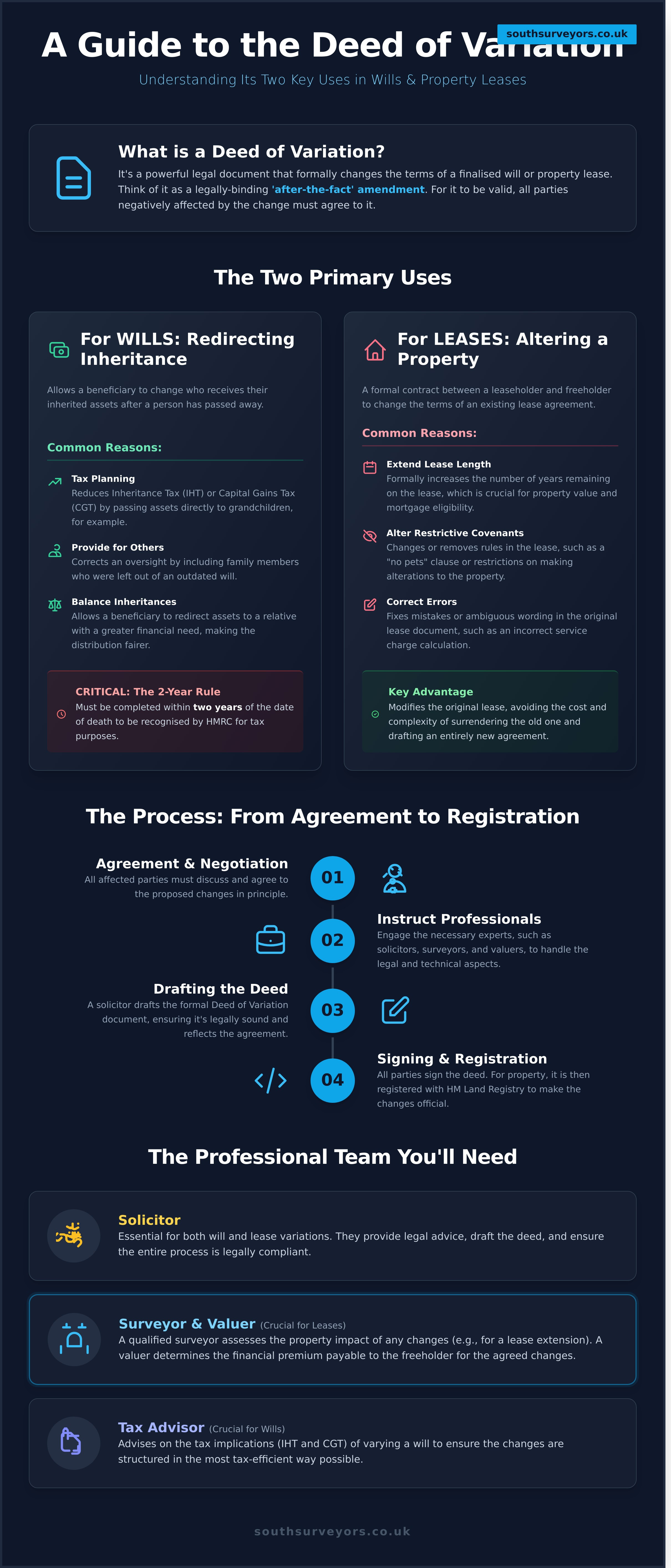
At its core, a Deed of Variation is a legal document used to formally change the terms of another legal document after it has been finalised. Think of it as a legal ‘after-the-fact’ amendment, which requires the agreement of all relevant parties to be valid. It provides a formal, binding way to alter arrangements without having to start from scratch. The formal name for this instrument, as recognised in UK law, is a Deed of Variation, and it serves distinct purposes depending on the context.
For a clear explanation of how this works in one of its most common uses, watch this helpful video:
While the name is the same, the term is most frequently encountered by people in two very different situations: altering the terms of a will after someone has passed away, or changing the conditions of a property lease. It’s crucial to understand which scenario applies to you, as the process and implications are entirely distinct.
Deed of Variation for Inheritance (Post-Death Will Alteration)
This is perhaps the most common reason people search for this term. A deed of variation allows beneficiaries of an estate to redirect their inheritance to someone else. For instance, a child might redirect their inheritance directly to their own children. This must be completed within two years of the date of death and is often done for two main reasons: to make the distribution of assets more tax-efficient (particularly for Inheritance Tax) or to ensure the outcome is fairer and better reflects the family’s wishes.
Deed of Variation for Property (Altering a Lease)
In property law, this document is used to change the terms of an existing leasehold agreement. It is a formal contract between the leaseholder (the property owner) and the freeholder (the landlord or owner of the land). Common reasons for this include formally extending the length of a lease, altering or removing a restrictive covenant (e.g., a rule against keeping pets), or simply correcting an error in the original lease. Its key advantage is that it modifies the original document, avoiding the complexity of surrendering the old lease and drafting an entirely new one.
Deed of Variation for Wills: Redirecting Your Inheritance
When a person passes away, their will dictates how their estate is distributed. However, circumstances can change, and the will may no longer reflect the most sensible or fair outcome for the family. A deed of variation is a powerful legal instrument that allows a beneficiary to redirect their inheritance to someone else, effectively rewriting a part of the will after death.
For a variation to be valid, several key conditions must be met. Crucially, all beneficiaries who are negatively affected by the change must agree to it in writing. The person choosing to redirect their inheritance must be of sound mind and over 18. Finally, the formal document must be signed by all relevant parties. It’s important to note that this tool is for redirecting assets only; it cannot be used to change the appointed executors or guardians named in the will.
Common Reasons to Vary a Will
Beneficiaries choose to vary a will for a range of practical and personal reasons, providing flexibility and peace of mind during a difficult time. The most common motivations include:
- Tax Planning: A variation can be a highly effective way to reduce a family’s overall tax liability, particularly Inheritance Tax (IHT) or Capital Gains Tax (CGT). For example, redirecting assets directly to grandchildren can utilise their own tax-free allowances.
- Providing for Someone Left Out: A will may not have been updated to include new family members, such as grandchildren, or a partner who was not married to the deceased. A deed can correct this oversight.
- Balancing Inheritances: Sometimes, a beneficiary may feel that a sibling or another relative has a greater financial need. A variation allows them to ‘even up’ the distribution in a way they feel is fairer.
- Passing Assets to the Next Generation: A beneficiary who is already financially secure can choose to pass their inheritance directly to their own children, skipping a generation in a tax-efficient manner.
The Key Legal Requirements (The ‘Two-Year Rule’)
To ensure a deed of variation is legally binding and recognised by HMRC, strict rules must be followed. The most critical requirement is the time limit: the deed must be completed within two years of the date of death. This deadline is absolute and offers no flexibility.
Furthermore, for the changes to be effective for tax purposes, the document must contain a specific statement of intent confirming that the variation should be treated as if the deceased had made it. The precise requirements are detailed in the HMRC Inheritance Tax Manual. It is also a firm rule that no beneficiary can be compensated or receive money in return for agreeing to the variation. Given these complexities, engaging an expert solicitor is essential to draft the document correctly and provide the clarity and confidence needed to ensure it is fully compliant.
Deed of Variation for Leases: A Homeowner’s Practical Guide
While often discussed in the context of inheritance and estate planning, a deed of variation is an equally critical legal tool in the world of property. For leaseholders, it is the formal mechanism used to make official changes to the terms of a lease agreement with the freeholder. This isn’t a casual agreement; it is a legally binding document that, once signed, is registered with HM Land Registry.
This process provides lasting clarity and protects the interests of all parties. Crucially, mortgage lenders frequently require a formal deed to be in place before they will lend, as it ensures the terms of their security-your property-are clear, correct, and legally sound, giving you and them complete peace of mind.
Altering Lease Covenants
Every lease contains covenants, which are essentially the rules you must follow as a leaseholder. These can be restrictive, such as clauses prohibiting pets or forbidding structural alterations. A deed of variation can permanently alter or remove such a covenant. For example, if you wish to build an extension that is technically forbidden by your lease, this deed would provide the formal, legal permission from your freeholder, overriding the original clause. In such cases, a professional surveyor is often instructed to assess the impact of the proposed changes.
Formalising a Lease Extension
When a lease term becomes short, it can make a property difficult to sell or remortgage. While there is a statutory process for lease extensions, many are agreed informally through direct negotiation with the freeholder. A deed of variation is the instrument used to legally document this agreement, amending the lease to reflect the new, longer term. To ensure you pay a fair price (the “premium”) for the extension, it is vital to instruct a RICS-certified valuer to provide an expert valuation.
Correcting Errors or Defects in a Lease
Older leases can sometimes contain errors or ambiguities that only come to light years later. Common examples include an incorrect service charge percentage being assigned to your flat or unclear responsibilities for the maintenance of a shared roof or garden. A deed of variation is the standard method for correcting these legal defects. By formally clarifying the terms, it prevents potential future disputes with your neighbours or the freeholder, saving significant stress and expense down the line.
The Process: From Agreement to Registration
Creating a legally binding deed of variation involves a structured process designed to ensure all parties are in full agreement and the changes are officially recorded. While the complexity can vary depending on whether you are altering a lease or a will, the fundamental journey follows a clear, methodical path. This roadmap provides clarity and confidence, guiding you from the initial conversation to the final, legally recognised amendment.
Step 1: Negotiation and Professional Advice
The first and most crucial step is achieving an agreement in principle. All relevant parties-whether they are beneficiaries of a will or the freeholder and leaseholder of a property-must consent to the proposed changes. This is the stage to engage professional experts to provide an objective assessment. For property deeds, a RICS-certified surveyor can offer a valuation to clarify how the changes might affect property value. A solicitor should also be consulted early on to confirm the legal feasibility of the variation and outline the best path forward.
Step 2: Drafting the Deed
Once an agreement is reached, a solicitor will draft the formal deed of variation. This legal document must be meticulously worded to accurately reflect the agreed changes, as any ambiguity can lead to future disputes. The draft is then circulated among all parties for a thorough review. This collaborative step ensures everyone is satisfied with the precise terms before the document is finalised, preventing misunderstandings and providing complete transparency.
Step 3: Signing and Execution
With the draft approved, the deed is prepared for execution. This involves all relevant parties signing the final document in the presence of a witness. The witness must also sign and provide their details to certify that they observed the signature. This formal act of signing and witnessing is what makes the deed a legally binding contract, transforming the agreement from a simple understanding into an enforceable obligation.
Step 4: Registration and Notification
The final step is to make the changes official. For variations affecting property, such as altering the terms of a lease, the signed deed must be registered with HM Land Registry. This updates the official property records. If the deed of variation relates to a will and alters the distribution of an estate in a way that affects Inheritance Tax or Capital Gains Tax, a copy must be sent to HMRC within six months. This finalises the process, ensuring the changes are formally recognised by the relevant authorities.
Who You Need: The Roles of Solicitors, Surveyors & Valuers
Successfully executing a deed of variation is rarely a solo effort. It requires a team of qualified professionals, each bringing specific expertise to the process. Understanding their distinct roles ensures you get the right advice at the right time, providing clarity and confidence from start to finish. This guide outlines the key experts you will likely need to instruct.
The Solicitor: Your Legal Architect
A solicitor’s involvement is non-negotiable in any property transaction, and this is especially true for altering legal documents. They are responsible for providing essential legal advice and drafting the deed to ensure it is robust, legally compliant, and enforceable. Their role includes:
- Advising on the legal implications of the proposed changes to your lease or deeds.
- Negotiating the precise terms with the other party’s legal representative.
- Drafting the final legal document with accurate and unambiguous wording.
- Handling the final registration of the deed with HM Land Registry or, if applicable, notifying HMRC.
Without a solicitor, you risk creating a document that is invalid or doesn’t achieve your intended outcome.
The RICS Chartered Surveyor: Your Technical Expert
When a variation involves physical alterations to the property, a RICS Chartered Surveyor becomes essential. Their technical assessment provides the impartial, expert evidence needed to justify a change, particularly when a restrictive covenant is involved.
For example, if you wish to build an extension that is technically forbidden by the lease, a surveyor can assess the plans and provide a professional report. This report can demonstrate to the freeholder that the proposed work is reasonable and won’t negatively impact the building’s structure or neighbouring properties, strengthening your case for the variation.
The RICS Registered Valuer: Your Financial Assessor
For variations that alter the value of a property or lease, such as a lease extension, the input of a RICS Registered Valuer is crucial. Their primary role is to determine the ‘premium’-the fair price payable to the freeholder for the agreed changes.
An impartial, expert valuation forms the bedrock of your negotiation. It provides a thoroughly researched, evidence-based figure in pounds (£) that prevents you from overpaying. This professional assessment gives you the confidence and leverage to ensure the final agreement is financially sound. Their comprehensive report is an indispensable tool for making an informed financial decision.
Need a RICS valuation for a lease extension? Contact our experts.
Navigating Your Next Steps with Confidence
As we’ve seen, a deed of variation is a powerful legal instrument for formally changing a will or a property lease. The crucial takeaways are that it requires the unanimous consent of all affected parties and that professional guidance from solicitors and surveyors is essential, particularly when dealing with property. Attempting to navigate the terms of a lease modification or valuation without an expert can lead to costly and stressful oversights.
For homeowners and leaseholders, this is where clarity becomes your greatest asset. At South Surveyors, our purpose is to provide you with the professional assurance needed to make sound decisions. As a firm Regulated by RICS, we leverage our deep Local South London Expertise to deliver clear, comprehensive reports for your peace of mind. Before you commit to any changes, ensure you have all the facts. Need clarity on a property issue? Get expert advice from a RICS Chartered Surveyor.
Frequently Asked Questions
How much does a Deed of Variation cost?
The cost of a Deed of Variation can vary significantly depending on the complexity of the changes required. Solicitor’s fees typically range from £500 to £1,500 plus VAT. However, you must also account for the freeholder’s legal and administrative fees, which can add several hundred pounds to the total. It is essential to get a clear quote from all parties involved upfront to understand the full financial commitment and proceed with confidence.
How long does the process for a Deed of Variation take?
The timeline for completing a Deed of Variation typically ranges from three to six months, but it can take longer. The process is dependent on the cooperation of all parties, including the freeholder and any mortgage lenders. Delays can occur if negotiations are required or if any party is slow to respond. Engaging a professional and proactive solicitor is crucial to help manage the process efficiently and keep it moving forward as smoothly as possible.
Can I write a Deed of Variation myself without a solicitor?
While technically possible, it is strongly inadvisable to draft a deed of variation yourself. This is a complex legal document that must be correctly worded and executed to be valid and enforceable. Errors could lead to future legal disputes, rejection by HM Land Registry, or problems when you try to sell the property. Using a qualified solicitor ensures the document is drafted correctly, protecting your interests and providing you with essential peace of mind.
What happens if one of the beneficiaries or the freeholder refuses to agree?
A Deed of Variation requires the unanimous consent of all relevant parties. If a freeholder (in a lease variation) or a beneficiary (in an inheritance variation) refuses to sign, the deed cannot be completed, and the original terms of the lease or will remain in effect. In such cases, the next step may involve negotiation or mediation to reach a compromise. Without agreement, you cannot legally force the change through this process.
Does a Deed of Variation on my lease affect my mortgage?
Yes, if you have a mortgage on your property, a Deed of Variation on your lease will almost certainly affect it. The deed alters the legal terms of the property that acts as the lender’s security, so you must obtain their consent before proceeding. Your lender will review the proposed changes and may charge an administration fee for their involvement. Failing to inform your lender could be a breach of your mortgage conditions, so this step is critical.
Is a Deed of Variation the same as a Deed of Rectification?
No, they serve different purposes. A Deed of Rectification is used to correct a factual error or mistake made in an original document, such as a typo in a boundary line description on a lease plan. Its purpose is to make the document reflect the parties’ original intention. In contrast, a Deed of Variation is used to intentionally change or update the agreed-upon terms of a legally sound document, creating a new agreement moving forward.