

Would you really spend hundreds of thousands of pounds on a Victorian terrace in Crystal Palace without knowing if the foundations are planning a slow escape toward the South Circular? It sounds like a joke, but the reality of South East London’s “characterful” housing stock is that what looks like charming period detail might actually be a very expensive headache in disguise. When you’re eyeing up a property in the SE or BR postcodes, understanding a RICS home survey level 3 what’s included is the difference between a dream home and a total money pit.
We know that the leap from falling in love with a kitchen island to signing a mortgage is terrifying, especially when you’re worried about hidden subsidence or damp in a CR or DA neighbourhood. This guide breaks down exactly what a Building Survey covers so you can stop guessing and start planning. You’ll discover how a deep-dive inspection uncovers structural flaws, provides repair estimates, and gives you the leverage to negotiate a price that reflects the property’s true health. We’ll walk through the surveyor’s checklist from the chimney stacks of Dulwich to the cellars of Dartford, ensuring you buy with total peace of mind.
Key Takeaways
- Understand why the Level 3 survey is the forensic gold standard for property inspections, going way beyond a basic condition report to reveal a building’s true health.
- Discover exactly RICS home survey level 3 what’s included in a deep-dive inspection, from checking dusty roof voids to inspecting the sub-floors of period London homes.
- Identify if that quirky warehouse in Bermondsey or a 1930s semi in Beckenham needs the Level 3 treatment based on its age, construction, and history of alterations.
- Learn how to decode the RICS traffic light system and use the “Repair Diary” to negotiate a purchase price that reflects the actual cost of future maintenance.
Decoding the RICS Home Survey Level 3: More Than Just a ‘Full Structural Survey’
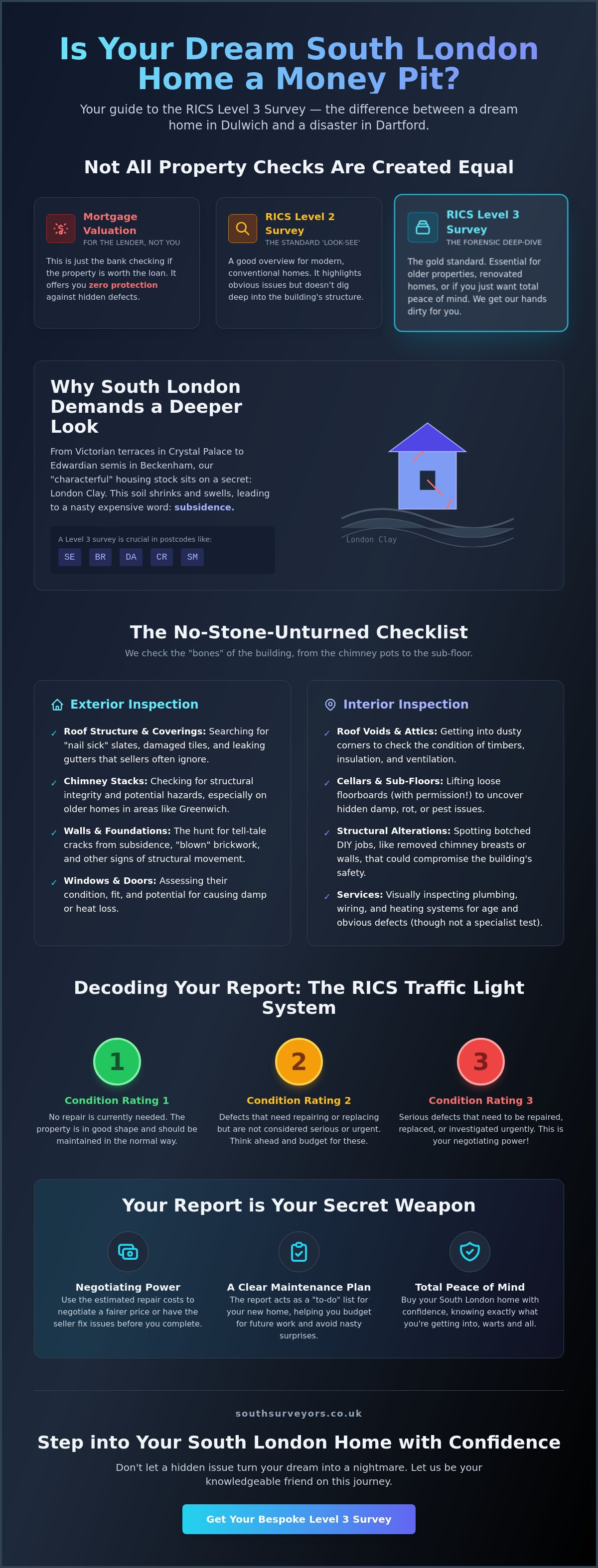
If you’ve been browsing Rightmove lately, you’ve probably heard the term “Full Structural Survey” thrown around by well-meaning estate agents. In reality, that name is a bit of a relic. RICS rebranded it to the Level 3 Building Survey to make things clearer for buyers, but the goal remains the same: a forensic, no-holds-barred look at a property’s health. While a Level 2 report is a great “look-see” for modern homes, the Level 3 is for when you need a professional to get their hands dirty and look behind the scenes.
Don’t confuse this with your mortgage valuation. The bank’s report is essentially a “will this house still be standing if the buyer stops paying?” check for the lender. It doesn’t protect you or your savings. For real protection, you need Chartered Surveyors in the United Kingdom who are working specifically for your interests. They act as your knowledgeable friend, digging into the details that a basic valuation would skip over entirely.
To better understand this concept, watch this helpful video:
Why South London Properties Need a Level 3 Lens
South London isn’t just about great coffee and parks; it sits on a literal foundation of trouble known as London Clay. In areas like Bromley (BR1) and Croydon (CR0), this soil is notorious for shrinking and swelling. It is a polite way of saying it causes subsidence. If you’re buying a Victorian terrace in Greenwich or a grand Edwardian home in Dulwich, you’re dealing with buildings that have seen a lot of history. From the leafy streets of Blackheath to the suburban charm of Sutton (SM1), every postcode has its quirks. A Level 3 lens is essential to spot if those cracks in the cornicing are just “settling” or a sign that the house is slowly moving. Even in a trendy Peckham renovation, fresh Farrow & Ball paint can hide “money pits” like botched structural removals or rising damp that could easily cost you £10,000 or more to fix post-purchase.
The Core Objectives of the Level 3 Report
When people ask about RICS home survey level 3 what’s included, they’re usually looking for a roadmap for their future. This report isn’t just a list of problems; it’s a strategic maintenance “to-do” list. We look for hidden defects in the “bones” of the building that could lead to financial ruin if ignored. The surveyor provides a professional opinion on the “consequences of inaction,” telling you exactly what happens if you don’t fix that leaking valley gutter or crumbling brickwork now. It empowers you to negotiate with confidence, knowing exactly what the next decade of homeownership in the SE or DA postcodes will actually look like.
The Forensic Deep-Dive: Exactly What’s Included in the Level 3 Inspection
If a Level 2 survey is a helpful summary, the Level 3 is the full, unedited story of a house. We don’t just walk through the rooms; we get into the anatomy of the building. This is where we apply a “no stone unturned” philosophy. Following the RICS Home Survey Standard, this inspection is the most thorough professional assessment available. While the official rule is to check “visible and accessible” areas, we push those boundaries for you. If there’s a loose floorboard we can safely lift or an unlocked cellar hatch, we’re going in to find what’s hiding underneath.
Exterior Inspection: From Chimney Pot to Foundations
We start from the top down. In areas like Sidcup (DA14), many older homes suffer from “nail sick” slates. This happens when the original nails holding the roof tiles rust away, leaving the slates ready to slip. We also examine the walls for structural movement or “blown” brickwork where moisture has caused the surface to flake off. In period properties around Herne Hill, we often find bridged damp proof courses. This usually happens when a trendy new patio is laid too high, allowing moisture to bypass the home’s natural defences and creep into the walls.
Interior Inspection: Lifting the Lid on Hidden Issues
Inside, we look for the things a quick viewing would never reveal. When clients ask about RICS home survey level 3 what’s included, the roof void is a major highlight. In Morden (SM4), we often find “bodge job” loft conversions in 1930s terraces that lack the proper steel supports. We also check original timber joists for the tell-tale signs of dry rot or woodworm. By using professional moisture meters, we can identify damp issues lurking behind a fresh coat of paint long before they become a visible problem for you.
Services and Grounds: The Full Picture
A house doesn’t exist in a vacuum, so we look at the whole plot. We perform observational checks on the “big three”: gas, electrics, and plumbing. We aren’t looking for a certificate, but we are looking for “danger signs” like outdated wiring or lead piping. Outside, we check the drainage and the impact of nearby trees. That stunning Sydenham oak might look great in your garden, but we’ll check if its roots are making a move on your pipes. We also look at boundary walls and outbuildings to ensure you know exactly what you’re taking on. If you want to ensure your potential home is as solid as it looks, you can view our full range of survey options to find the right level of protection for your purchase.
Level 2 vs. Level 3: Which Survey Suits Your South London Postcode?
Choosing between a Level 2 and a Level 3 survey isn’t just a matter of clicking the cheapest box on a website. It’s about matching the level of scrutiny to the specific bones of the property you’re about to call home. If you’re looking at a standard 1990s build in a quiet corner of Sutton, a Level 2 might be your best friend. However, if you’ve fallen for a quirky converted warehouse in Bermondsey or a grand Victorian pile in Greenwich, you’re going to need the heavy-duty option. When you’re weighing up a RICS home survey level 3 what’s included against a cheaper alternative, think about the long game. Paying a bit more now prevents the dreaded “Croydon Cracker” surprise, where a hidden structural crack turns into a five-figure repair bill six months after you move in.
The “Age Rule” is a great starting point for any buyer. Generally, if a property was built before 1850, or if it has been significantly altered, extended, or knocked about over the years, a Level 3 survey is non-negotiable. These older buildings have seen decades, if not centuries, of “creative” DIY and historic repairs. You need a professional to verify that the 1970s extension hasn’t compromised the original structure. If you’re planning your own grand designs, like knocking down walls to create that open-plan kitchen, you need the forensic data of a Level 3 report before the first sledgehammer swings.
When a Level 2 (HomeBuyer) is Enough
For many buyers in the DA or SM postcodes, a Level 2 survey is actually the perfect fit. If you’re eyeing a modern house in Dartford or a standard suburban semi in Sutton that hasn’t been touched since the day it was built, the Level 2 provides excellent value. It’s designed for properties in “standard” condition with no obvious quirks. You can dive deeper into the specifics of this option in our Level 2 Survey guide to see if it fits your needs.
The ‘Red Flag’ Scenarios Requiring Level 3
Sometimes the house itself tells you that it needs a deeper look. If you spot significant cracks in an Eltham semi-detached or notice that a property has been “flipped” suspiciously quickly, alarm bells should ring. We also highly recommend the Level 3 for any non-traditional construction. Whether it’s a post-war prefab or a modern timber-frame project, these buildings require specialist eyes to spot issues that a standard inspection might miss. Understanding RICS home survey level 3 what’s included ensures you don’t walk into a “lemon” just because the exterior looks freshly painted.
The PDF has landed. It is 50 pages of professional scrutiny, and it is perfectly normal to feel a bit of “report anxiety” before you open it. When you look at RICS home survey level 3 what’s included, the first thing you’ll notice is the traffic light system. RICS uses Green, Amber, and Red to rank the urgency of every defect. Green means things are looking good. Amber suggests a repair is needed soon but isn’t an emergency. Red is the heavy hitter, indicating a serious defect that needs immediate attention.
One of the most valuable parts of our Level 3 report is the “Repair Diary.” This isn’t just a list of problems; it is a strategic financial plan. We help you budget for the next 5 to 10 years, showing you exactly when that flat roof might need replacing or when the exterior timber will need a fresh coat of protection. We also include a “Summary for Legal Advisers” section. This is a punchy, technical cheat-sheet for your conveyancer, highlighting the specific issues they need to check in the title deeds or local authority records.
Turning Defects into Negotiation Power
A “Red” rating doesn’t mean you should run away from your dream home in Bromley. It means you should negotiate. You can use our repair estimates as a factual anchor to remove emotion from the price discussion. If the survey reveals £8,000 of damp proofing is required, that is a solid, evidence-based reason to ask for a price reduction. Sometimes we’ll recommend further specialist reports, such as a CCTV drain survey, if we suspect the local clay soil has shifted and damaged the pipes. This ensures you have the full picture before you commit.
The Personal Touch: Talking Through the Report
Technical jargon can be intimidating, which is why we always offer a follow-up consultation. We want to help you distinguish between standard maintenance, which is part of owning any period property, and genuine structural failure. It is about giving you the confidence to make an informed choice. For a head start on the lingo, you can read our guide on Understanding Your RICS Home Survey. If you want a surveyor who treats your purchase with the same care as their own, you can get an instant quote for your Level 3 survey and start your journey on solid ground.
Why a Bespoke RICS Level 3 Survey from South Surveyors is Your Secret Weapon
Buying a home in South London is a high-stakes move. You aren’t just buying bricks; you’re buying into a specific history. When you look at RICS home survey level 3 what’s included, you’ll see that the standard is high, but the delivery matters just as much as the data. We don’t believe in the “tick-box” corporate templates that big national firms use. Those reports often feel like they were written by an algorithm that has never actually set foot in a Victorian terrace in Herne Hill. At South Surveyors, our reports are bespoke narratives that explain the “why” behind every finding.
We pride ourselves on hyper-local expertise that covers the SE, BR, DA, CR, and SM postcodes with genuine passion. We know the difference between a 1930s build in Beckenham and a post-war bungalow in Bexleyheath. This matters because the structural risks in a CR0 postcode aren’t the same as those in a DA14 neighbourhood. By choosing a local expert, you’re getting someone who understands how “London Clay” behaves on your specific street and how local architectural quirks can impact your long-term maintenance costs. When researching RICS home survey level 3 what’s included, you deserve a report that feels personal to your purchase.
Expertise You Can Trust
Our RICS regulation is our ultimate seal of quality. It means we adhere to the highest industry standards while maintaining the “knowledgeable friend” approach that our clients love. We speak your language, not just surveyor-speak. Our goal is empowerment. We want to give you the tools to make a sound investment, whether that means proceeding with confidence or using our findings to negotiate a fairer price. We’ve seen the “money pits” hidden behind fresh plaster in Peckham and the solid gems in Sidcup. We’re here to make sure you know exactly which one you’re walking into.
Take the Next Step Toward Your New Home
We believe in accessibility. That means we’re here to answer your questions both before and after the survey. You won’t be left alone with a complex PDF. We’ll talk you through the “Red” ratings and help you understand the “Repair Diary” mentioned earlier so you can plan your future with total clarity. Getting a quote from us is easy and reflects your specific property, not just a generic estimate based on a price bracket. Ready to protect your purchase? Get your bespoke Level 3 Survey quote from South Surveyors today and buy your South London home with absolute peace of mind.
Step Into Your South London Home With Total Confidence
You’re now armed with the facts about what a forensic inspection actually looks like. From spotting “nail sick” roofs in Sidcup to understanding the shifting London Clay in Bromley, you know that a basic valuation just doesn’t cut it for South London’s unique housing stock. Understanding RICS home survey level 3 what’s included is your first step toward avoiding a “lemon” and ensuring your hard-earned savings are safe.
By choosing a RICS Regulated Firm with deep roots in the SE, BR, and CR postcodes, you get more than just a report. You get a strategic roadmap for your property’s future. Our local experts provide detailed repair estimates that turn scary defects into powerful negotiation tools, giving you the upper hand in your property journey. Whether you’re eyeing a Victorian terrace or a modern semi, we’re here to make sure you move in with your eyes wide open.
Ready to get started? Get a bespoke RICS Level 3 Survey quote for your South London home today. We’ll help you secure your piece of London with expertise, clarity, and a friendly touch.
Your Burning Questions Answered
Is a Level 3 survey worth the extra cost?
Yes, it’s absolutely worth it if you’re buying a period home in Bromley or an extended house in Croydon. Think of it as a small insurance policy against a £20,000 repair bill for subsidence or dry rot. It provides the deep-dive data you need to buy with confidence rather than crossing your fingers and hoping for the best. Paying for expertise now saves a fortune later.
How long does a RICS Level 3 Building Survey take to complete?
A thorough inspection usually takes between three and six hours on-site. If you’re looking at a large Victorian villa in Dulwich, expect us to be there for the longer end of that scale. We take the time to check every accessible nook and cranny, from the dusty corners of the loft to the sub-floor voids, ensuring nothing is missed in the report.
Does a Level 3 survey include a property valuation?
A standard Level 3 report focuses on condition and doesn’t automatically include a market valuation. While some surveyors offer it as an add-on, it isn’t part of the core RICS home survey level 3 what’s included list. If you need a formal RICS Property Valuation for your lender or personal peace of mind, we can provide that as a separate service to your survey.
Will the surveyor lift floorboards or move furniture during a Level 3 inspection?
We don’t move heavy furniture or lift fitted carpets because of the risk of damage, but we do get as close as possible. If there are loose floorboards or accessible hatches, we’ll lift them to peek at the joists. We also open manhole covers to check the drainage, ensuring we see as much of the “bones” as safety and accessibility allow during the visit.
What happens if the Level 3 survey reveals serious structural issues?
Don’t panic; a “Red” rating is a tool, not a deal-breaker. If we find serious structural issues in an Eltham semi, we’ll explain the consequences and suggest the next steps. This usually involves getting a specialist quote for the repairs, which gives you the hard evidence you need to decide whether to walk away or negotiate the purchase price with the seller.
Can I use a Level 3 survey to negotiate the house price?
Yes, this is one of the biggest benefits of the report. If the survey identifies £10,000 of necessary work in a Sutton terrace, you have a factual anchor to ask the seller for a price reduction. Most sellers are reasonable when presented with a professional RICS report rather than just a buyer’s “feeling” that the roof looks a bit dodgy or the walls seem damp.
How much does a RICS Level 3 Building Survey cost in South London?
The cost varies significantly based on the property’s size, age, and location within South London. A grander home in Greenwich will naturally require more time than a smaller cottage in Dartford. Instead of looking for a generic price, it’s best to get a bespoke quote that reflects the specific complexity of the building you’re buying to ensure you get the right level of detail.
What is the difference between a structural survey and a Level 3 Building Survey?
“Structural Survey” is just the old-fashioned name for what is now officially called a RICS Level 3 Building Survey. RICS updated the terminology to make the different levels of service easier for buyers to understand. They are the same forensic, deep-dive inspection, just with a modern name that fits the current RICS Home Survey Standard and provides the most comprehensive level of detail.